
In Nigeria today, much of the political dysfunction isn’t about who has power — it’s about the difference between power and authority, a distinction our leaders still refuse to grasp. And until they do, we’ll keep circling the same crisis.
Power vs. Authority: Stop Confusing Them
Power is brute force. It’s loud. It’s immediate. It’s the ability to make people do things. Authority? That’s earned respect. That’s moral legitimacy. That’s when people follow you not because they fear you, but because they believe in you. In Nigeria, too many leaders act as though power is authority — and that’s where we go wrong.
A Toxic Legacy: Colonialism and Coups
Let’s not sugarcoat it — our problems date back to colonialism. The British imposed force, dismissed indigenous structures, and equated leadership with domination. That laid the groundwork for future Nigerian rulers to confuse command with governance. Then came the coups: decrees, not debate; coercion instead of consensus. For decades under military rule, authority didn’t matter. Only obedience did.
Civilians Return — But Do We Shed the Military Mindset?
When democracy finally came back, Nigerians hoped for a transformation — from force to legitimacy. Instead, many civilian rulers inherited the worst habits of the barracks. They lean on patronage, security agencies, and brute political muscle rather than moral leadership. Abuse of power is not an exception. It’s become the norm.
Case in Point: Wike in Abuja
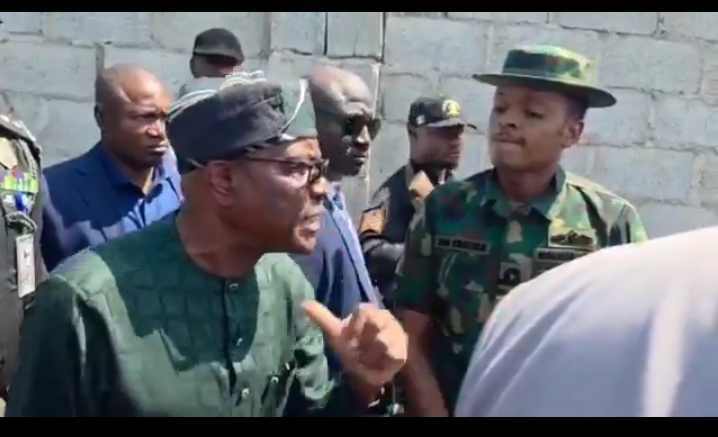
Take the recent showdown in Abuja: Nyesom Wike, Minister of the Federal Capital Territory, personally confronted a naval officer over a piece of land belonging to a former naval chief. On paper, FCT officials are supposed to function like a state government — the Constitution treats FCT as a state. Yet Wike went beyond process: instead of following legal protocols, he showed up and enforced his will.
That’s raw power, not civil authority. If there’s a case of illegal occupation, go to court. Involve the police. Don’t act like a one-man military. If it were a genuine trespass issue, Wike should have called in the Inspector-General — criminal trespass under Section 342 of the Criminal Code, not a personal vendetta.
And when the navy marched in? That’s an even bigger red flag.
Why the Military Came In — And Why It’s a Big Problem
Soldiers don’t belong on building sites. Their job, constitutionally, is external defence — not policing. The Nigerian Constitution allows for military deployment in aid of civil authorities only when the President calls for it and when legal conditions are met.
Here, there’s no evidence that the President gave that call. So what happened? Military incursion into civilian governance — a throwback to authoritarian times. Lawyers have warned that such deployments threaten the rule of law.
Power Without Legitimacy: A Pattern, Not a Bug
This isn’t just about Wike or the navy. It’s systemic. From Abacha’s brutality to Babangida annulling the 1993 election, our history is littered with leaders who mistook power for legitimacy. And in democracy, the trend hasn’t stopped — governors dissolve assemblies, manipulate anti-graft agencies, deploy security forces to intimidate rivals. Yes, even presidents use “federal might” to weaken opposition: cutting funds, deploying forces during elections.
Remember Obasanjo’s showdown with Lagos State? Or recent moves in Osun and Rivers? These aren’t random. They’re symptoms of the same disease.
Why It Matters: When Power Lacks Authority
When power isn’t grounded in trust, everything breaks:
- Public trust evaporates.
- Institutions weaken.
- Policies fail because nobody truly cooperates.
- Leaders lose credibility.
- The country drifts — not forward, just around in circles.
Look globally: Libya’s Gaddafi ruled by fear, then collapsed. Egypt’s Mubarak lacked real legitimacy, and people overthrew him. The USSR stood tall on force — but disintegrated when people stopped believing in it.
In Nigeria, the Cycle Keeps Playing
Our elites rise on power — not merit. They don’t build authority; they seize it. And Nigerians obey, not because they believe, but because they fear. That’s a recipe for stagnation.
Yes, power can win the office. But without authority, you can’t hold the nation together.
The Real Reckoning
Right now, authority is on trial in Nigeria — not in the courts, but in the hearts of citizens. After decades of leaders confusing force with legitimacy, many Nigerians have simply stopped trusting the system.
If we ever want real transformation, our leaders must stop acting like they own us. They must earn our belief, our consent, our trust. Until they do, power will remain empty. And Nigeria will remain stuck.