
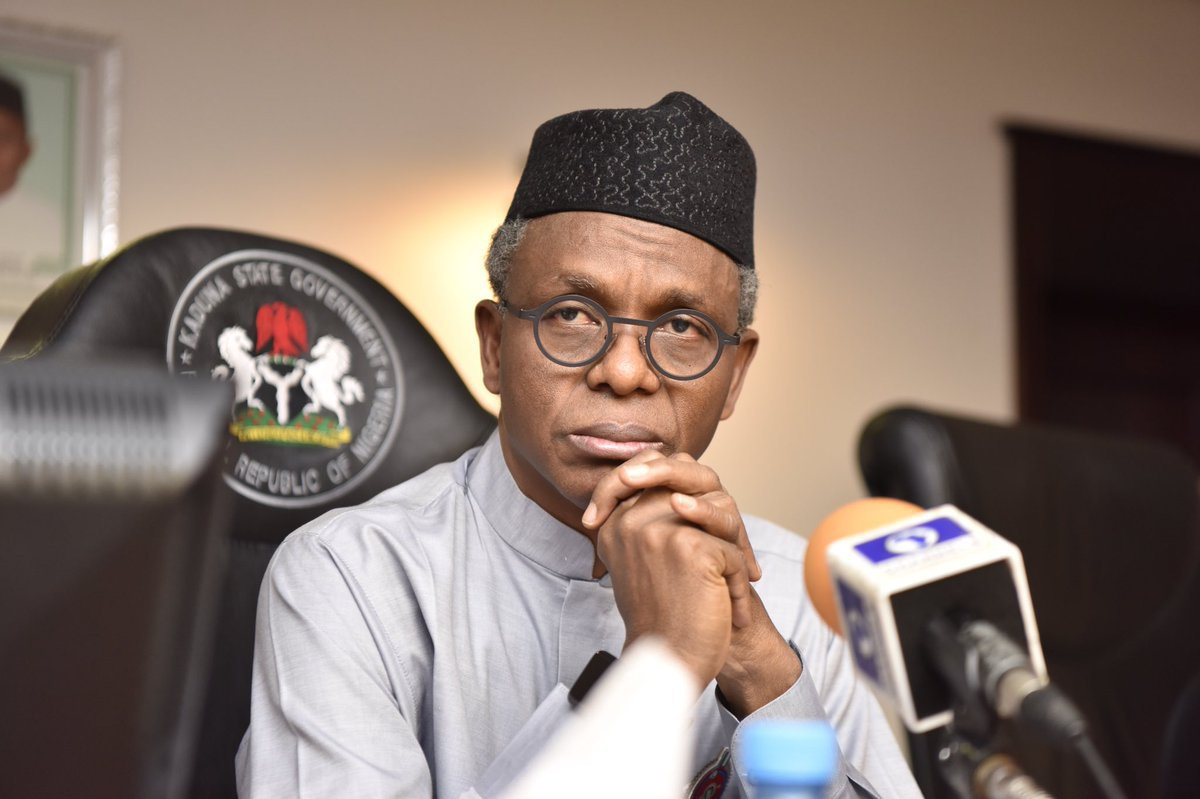
BREAKING: El-Rufai in ICPC Custody, Home Raided as Anti-Graft Storm Tightens Grip
ABUJA — Former Kaduna State Governor Nasir El-Rufai remains in the custody of Nigeria’s anti-corruption watchdog, the Independent Corrupt Practices and Other Related Offences Commission (ICPC), as the agency deepens its probe into alleged financial mismanagement during his eight-year tenure. The tense standoff on Thursday saw operatives raid the ex-governor’s Abuja residence — a move his legal team blasted as a flagrant breach of due process.
El-Rufai has now spent a second consecutive night with the ICPC in Abuja, according to multiple credible reports. The detention comes hot on the heels of his earlier questioning by another anti-graft body, the Economic and Financial Crimes Commission (EFCC), illustrating the overlapping and intensifying legal pressure on one of Nigeria’s most high-profile former governors.
From EFCC to ICPC — A Rapid Escalation
The saga began earlier this week when El-Rufai voluntarily presented himself at the EFCC headquarters in Abuja on Monday following an invitation over alleged financial improprieties tied to his period as governor of Kaduna State between 2015 and 2023.
In that initial engagement, investigators grilled the ex-governor and his legal team over a range of transactions and projects executed under his watch. After two nights in EFCC custody, he was granted administrative bail late Wednesday. But freedom was short-lived. As he stepped out, operatives from the Department of State Services (DSS) reportedly took him into their custody amid separate allegations of cybercrime and phone interception — claims El-Rufai has publicly denied.
Barely hours later, the DSS reportedly handed him over to the ICPC, which confirmed his detention on Wednesday night. The commission stated that El-Rufai was in its custody “in connection with ongoing investigations,” but refused to detail the nature of the probe.
Legal Firestorm: Home Raid Draws Sharp Rebuke
In a dramatic development on Thursday, ICPC operatives executed a search of El-Rufai’s Abuja residence on Aso Drive, intensifying scrutiny and sparking sharp condemnation from his legal team.
According to his media aide, Muyiwa Adekeye, the search was carried out amid the ongoing investigation. On social media platform X, El-Rufai’s lawyer, Ubong Akpan, didn’t mince words — calling the action “unlawful and a clear violation of legal procedures and fundamental rights.” The legal team has not yet indicated whether they will challenge the search in court.
The ICPC has so far kept tight-lipped on what precisely it is investigating, a pattern that has frustrated both journalists and political watchers. Calls to the commission’s spokesman for further comment have reportedly gone unanswered.
What’s the Probe About?
While authorities have not officially disclosed the subject of the ICPC’s inquiry, multiple credible media reports link the investigation — at least in part — to controversies involving major state contracts and projects initiated during El-Rufai’s time in office.
One of the most discussed among these is the failed Kaduna light rail project, where government funds reportedly totaling about N11.1 billion were paid to a joint venture partner but the project was never delivered. Court filings and prior statements suggest the ICPC is probing this scandal, though formal charges related to this have not been disclosed.
Earlier, in 2024, the Kaduna State House of Assembly accused El-Rufai of improperly diverting public funds — a claim that sparked calls for anti-graft intervention. While those allegations have played out in the court of public opinion and political debate, they now appear to be part of the broader legal terrain into which the ICPC’s current inquiry fits.
What This Means For Nigeria’s Politics
The confluence of actions by three major agencies — EFCC, DSS and ICPC — is unusual, even by Nigeria’s turbulent standards of high-profile probes. It highlights a legal and political narrative that has rapidly moved from administrative invitation to day-after-day detention and public legal confrontation.
For El-Rufai, once a towering figure in the ruling party and a key political operator, the situation marks a potential turning point. His supporters have already decried what they view as selective targeting, while critics argue this is overdue accountability for alleged fiscal mismanagement. The truth likely lies somewhere in between — but for now, the courts, prosecutors and public opinion will determine how the chapters ahead unfold.
What Comes Next
At press time, there is no schedule yet set for arraignment or formal charges in relation to the ICPC’s investigation. El-Rufai’s legal team is expected to seek judicial redress over the residence search and detention conditions, while anti-graft agencies continue to gather evidence.
As this case evolves, it will test Nigeria’s legal system, its anti-corruption architecture, and perhaps even reshape political narratives heading into future elections — making this more than just another headline.