
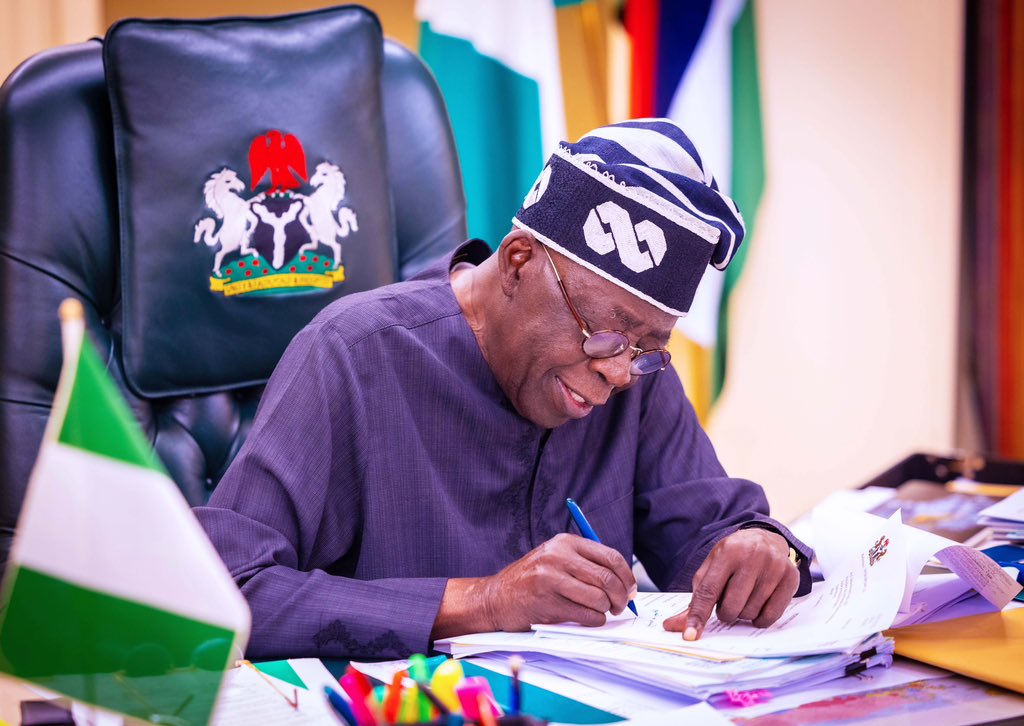
KANO — Bola Ahmed Tinubu stood before 1,187 newly commissioned Assistant Superintendents of Police (ASPs) at the Nigeria Police Academy, Wudil, yesterday, and he made one thing clear: the federal government is all in. “We will work tirelessly to address the root causes of insecurity,” he thundered. But in the North‑West, where kidnapping, banditry, and cross‑border crime have become daily realities, local leaders are sounding a very different note — decentralisation or bust.
New Officers, Old Problems
The parade was more than ceremonial. Each cadet not only donned the uniform of the Nigerian Police but walked away with a degree, marking the culmination of five years of intensive academic and professional training. The academy now calls itself a world-class institution, and Tinubu was eager to tout it.
Represented by Secretary to the Government of the Federation (SGF) George Akume, the president told the cadets that Nigerians have entrusted their safety to them. He demanded unwavering integrity, respect for human rights, and professional conduct. “You are not just enforcers of the law,” Tinubu reminded them. “You are guardians of our collective security and well-being.”
The president also promised government backing — better equipment, logistics, training, and welfare. He stressed that policing is not just about weapons: the administration is targeting socio-economic drivers of crime, including unemployment, social exclusion, and lack of opportunities. Economic growth, social cohesion, and inclusive development are part of his plan to choke the roots of criminality.
Tinubu’s Security Agenda
Tinubu’s vision for Nigeria’s security involves multiple layers:
- Modernising police equipment and logistics.
- Expanding training programs and professional development.
- Strengthening intelligence and operational capacity across security agencies.
- Promoting economic and social policies that address the causes of crime.
He commended the police academy for its progress, noting improvements in infrastructure and training quality. According to him, the cadets are stepping into a “new era,” and the nation expects them to be ready for complex security challenges.
Northwest Leaders Push Back
While Tinubu was speaking in Kano, a security summit convened in Kaduna painted a starkly different picture. The Senate Ad-hoc Committee on National Security brought together governors, senators, academics, traditional rulers, and security experts to address escalating insecurity in the North-West.
Governor Uba Sani of Kaduna didn’t mince words. He blamed Nigeria’s porous borders for the region’s escalating violence. Outlaws, smugglers, and traffickers cross borders at will, retreating to neighboring countries when pursued. These same networks bring in arms, drugs, and contraband, fueling both crime and chaos.
Sani warned that the proliferation of small arms — estimated in the tens of millions — has made violence more lethal, while drug trafficking and abuse have become major revenue streams for kidnappers and bandits. “Young people are being recruited and manipulated with narcotics,” he said, describing a social fabric already fraying under repeated attacks.
The governor pushed for a North-West Theatre Command — a unified structure that would merge Army divisions and other security agencies under one regional command. He also called for State Police, arguing that current vigilante groups are ineffective and exposed. “Sending them out unarmed amounts to a death sentence,” he said bluntly.
A Call for State-Level Action
Sani’s vision for State Police is bold but measured. He insists safeguards are needed to prevent political interference and ensure professionalism. Permanent security committees, he suggests, should be established at state and local levels, involving traditional rulers, religious leaders, women’s groups, youth organisations, civil society, and security agencies.
Governor Mohammed Badaru Abubakar of Jigawa backed a whole-of-society approach, warning that Nigeria cannot rely solely on military solutions. Regional collaboration, he stressed, is critical to stabilizing the North-West and, by extension, the country.
Senator Babangida Hussaini, chairman of the organizing committee, highlighted the grim realities: banditry, kidnappings, ransom-driven exploitation, and humanitarian displacement require region-specific, holistic intervention.
The Stakes Are High
Tinubu’s promises, however well-intentioned, clash with a reality that refuses to wait. The North-West is now the proving ground of Nigeria’s commitment to protect its citizens. Cadets marching out of Wudil will face communities where security vacuum is not abstract; it is violent and persistent.
The tension is stark. Federal efforts emphasize central control, uniform standards, and socio-economic programs. Regional leaders argue that local problems demand local solutions — operational autonomy, State Police, and theatre commands to respond rapidly and intelligently to threats on the ground.
The question now is not whether Nigeria needs more police officers or better training — it clearly does — but whether a centralized strategy can address centuries-old regional weaknesses and modern security threats simultaneously.
On the Ground
For the cadets, the message is clear: they have a country watching, armed with promises, expectations, and resources. For governors in Kaduna, Sokoto, Kano, and beyond, the message is equally clear: “We need operational freedom, state-level accountability, and immediate action.”
Tinubu’s administration faces a hard truth: commissioning thousands of new officers and investing in socio-economic programs is necessary but not sufficient. Without decentralised, locally responsive structures, the North-West’s security crisis is likely to worsen, and the human toll will continue to mount.
The battle for Nigeria’s security is no longer just about equipment or training; it’s about trust, strategy, and power — and the clock is ticking.