
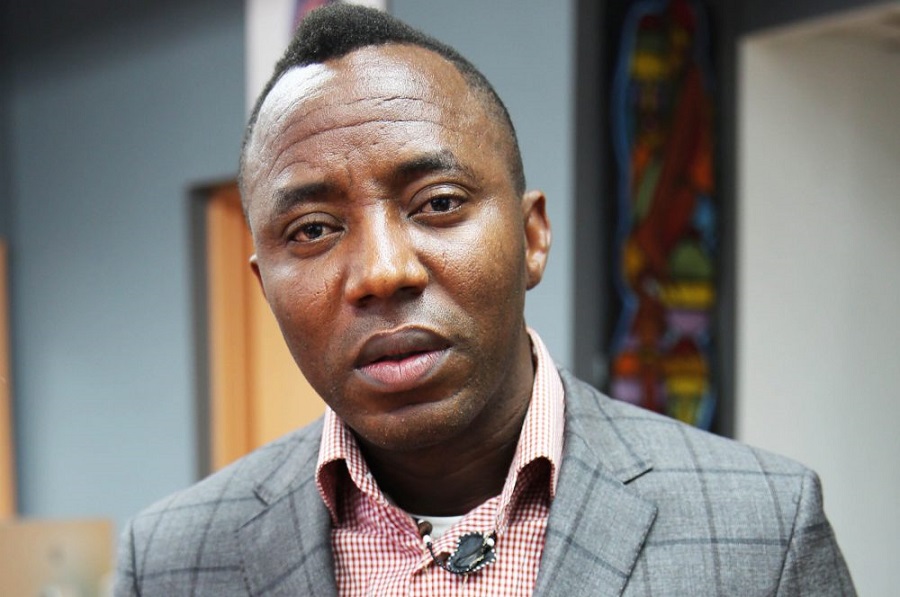
Abuja — In a scathing rule-out of foreign intervention as the cure to Nigeria’s crisis, human-rights activist and former presidential candidate Omoyele Sowore has told the nation plainly: stop looking abroad for salvation—look in the mirror.
The context: Donald Trump this week declared on social media that Christianity in Nigeria is facing an “existential threat,” accusing “radical Islamists” of mass slaughters and adding Nigeria to the U.S. list of ‘countries of particular concern’ for religious-freedom abuses. (Reuters)
In response, Sowore posted that these assertions miss the point—and miss the real perpetrators. He warned that reducing Nigeria’s layered insecurity and violence to a simple Christian-versus-Muslim narrative is dangerous, misleading, and lets those in power off the hook.
Bad leadership kills more than bad actors
Sowore acknowledged the pain of Christian communities in states like Benue, Plateau, Gombe, and Kaduna, while also pointing to Muslim populations under attack in Katsina, Zamfara, Borno, and Yobe. He argued that the state’s failure is non-partisan:
“Children, women, students, workers, and the elderly have all suffered under the weight of corruption and illegitimate leadership.”
Sowore’s blunt message: the enemy isn’t the foreign power — the enemy is incompetence, corruption, and irresponsibility at home.
Foreign flags won’t fix domestic rot
He warned that while international spotlight and special designations may bring momentary relief, they’re not the solution. The real fix needs to happen inside Nigeria:
“No foreign power can fix what corrupt and careless leaders have broken from within.”
In his words: Nigeria’s salvation lies in “visionary, accountable, people-centred leadership — one that protects its citizens, unites its people, and rebuilds the nation from the ground up.”
The U.S. move: gesture or game-changer?
On October 31, 2025, Trump announced Nigeria’s inclusion on the Countries of Particular Concern list under the 1998 International Religious Freedom Act. The self-armoured move signals potential U.S. penalties — including suspension of non-humanitarian aid — though not guaranteed. (Associated Press)
However, analysts warn that the designation doesn’t settle the religious-violence debate. A recent investigation found most victims of rural violence in northern Nigeria are actually Muslims, not Christians — highlighting why commentators caution against framing the crisis strictly in faith terms. (AP News)
Why this matters now
Nigeria is experiencing a surge in multi-front violence: communal clashes, banditry, farmer-herder wars, Islamist insurgency, and governance breakdown. A single narrative — “Christians under siege” — oversimplifies and misdirects the root causes. (Financial Times)
Sowore is leveraging that complexity to issue a larger warning: if Nigerians keep looking for external saviours while letting domestic predators flourish, they will stay stuck in the same deadly cycle.
The takeaway
- Nigeria’s crisis isn’t just about faith communities being targeted — it’s about the state’s inability to protect all its citizens.
- Foreign declarations may shine a light, but they don’t throw out the garbage: that job remains local.
- Real change requires more than slogans: it demands leadership that puts people ahead of power, vision ahead of patronage.
Sowore is not sugar-coating. His message: your salvation lies with the leader you choose, the one you hold accountable — and the one you refuse to accept if they fail.