
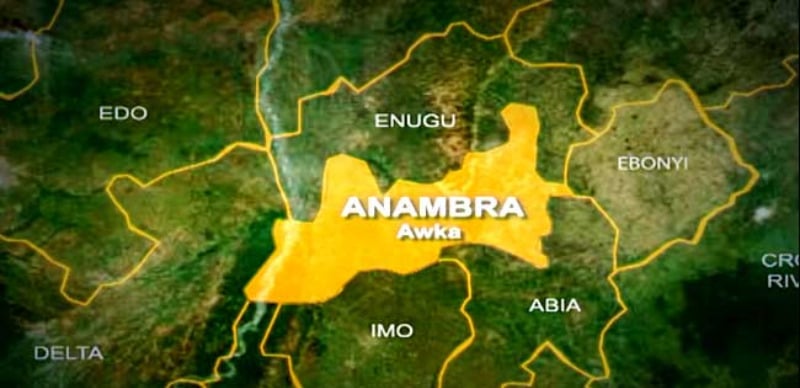
Awka, Anambra State — Come Saturday, 8 November 2025, roughly 2.8 million registered voters in Anambra State will cast ballots for governor, and the political battlefield is heating up. What looked like an open field has narrowed into a bruising contest where a handful of candidates dominate the headlines — and the incumbent isn’t about to go quietly.
Here’s a take, stripped of fluff, in the tone you expect on oreoluwaolaleye.com.ng — bold, blunt, and damn relevant.
1. Charles Soludo (APGA)
The governor himself. Experts describe him as enjoying the incumbency edge: state machinery, name recognition, and a party well-ingrained in the region. He ran under the All Progressives Grand Alliance (APGA), a party that has held sway in Anambra for years. But turf politics still matter: the senatorial-zone rotation favours the southern district, and Soludo hails from there — giving him favourable ground.
Yet — and it’s a big yet — he’s got problems. His repeated distancing from the Indigenous People of Biafra (IPOB) narrative and the admiration for Peter Obi among many Anambra residents may have cost him some goodwill. Also: many candidates (10 of 16) come from his same zone — vote splitting looms.
Bottom line: favourite, yes. But far from invincible.
2. Nicholas Ukachukwu (APC)
If you’re looking for the contender with resources and ambition, this is him. The All Progressives Congress (APC) candidate, he’s a business magnate turned politician — running with veteran grassroots politician Uche Ekwunife as his running mate.
What works in his favour:
- National ruling party backing (in theory).
- A running mate who has real connection.
- Fresh-up energy of “time for change”.
What drags him down: his academic credentials have been publicly criticised, and APC is not exactly beloved in Anambra’s southeast. Add to that the lingering question: will the national party hierarchy actually deliver for him? Analysts say the answer is murky.
Will he upset the favourite? Maybe. Enough to win? The gap is still wide.
3. George Moghalu (LP)
The wild card. Labour Party (LP) candidate, ex-Director-General of the National Inland Waterways Authority (NIWA), from Nnewi. He’s got backing from some “Obidient” factions (followers of Peter Obi) and is staking his campaign on being the genuine outsider. Solid narrative.
But: lack of deep party machinery, and his campaign has largely been a critique of Soludo rather than a robust offering of his own vision. Analysts see his chances as slim unless there’s a dramatic shock.
4. Paul Chukwuma (YPP)
Here’s a candidate that intrigues: moved from APC to the Young Progressives Party (YPP). Intellectual, ambitious, says governance should transcend zone or tribe. He’s hitting every campaign circuit.
But: his party lacks the heft; his zone (north) was just in power; cultural/political inertia works against him. To really matter he’ll need more than vision — he’ll need machinery. A “dark-horse” label fits best.
5. John Nwosu (ADC)
The manifesto guy. With the African Democratic Congress (ADC), he appeals to voters who are tired of the usual suspects. He had the backing of some Obi allies.
But reality check: his odds are described as bleak. Why? The big leagues are already dragging their voters to Soludo or Ukachukwu. And being a “nice idea” is not enough in this fight.
6. Jeff Nweke (AA)
Let’s name him “the campaign character.” Candidate for the Action Alliance (AA). Real-estate mogul turned security entrepreneur from Awka (central zone). Promises to fix insecurity — that’s the headline.
He’s got a niche following. But realistically? Not a serious contender for win. More a statement. More a “look over here” than a “we will win” campaign.
The Field at Large
It’s not just these six. Sixteen candidates are on the ballot, from various parties. Even so, analysts agree: this is essentially a two-horse race between Soludo and Ukachukwu unless something huge happens.
Security remains a looming question — and not just in campaign days. Sit-at-home orders, local unrest, vote-buying concerns: they’ll all play into turnout and legitimacy. And peace matters: parties signed a peace accord just days ago — a nod to the tense terrain.
What to Watch
- Turnout: Will the 2.8 million (approx) registered step up? Low turnout helps the machine.
- Zone vs. sentiment: Rotational zoning favours South; many candidates hail from there — splitting votes.
- Incumbent advantage vs. anti-incumbency: Soludo has both tools and targets on his back.
- National party involvement: Ukachukwu banked on APC’s muscle; how much will it manifest?
- Surprise factor: Moghalu, Nwosu, Chukwuma could upset if base shifts.
Final Take
This isn’t a routine election. In a state long shaped by regional circuits, entrenched parties and big personalities, the 2025 contest promises drama, risk, and no shortcuts. Soludo starts in front — but with complex headwinds. Ukachukwu has muscle but needs momentum. The rest? They trail, but in Nigerian politics, trailing doesn’t mean silent.
Grab your popcorn, sharpen the dialogues — Anambra’s next chapter writes itself this weekend.