
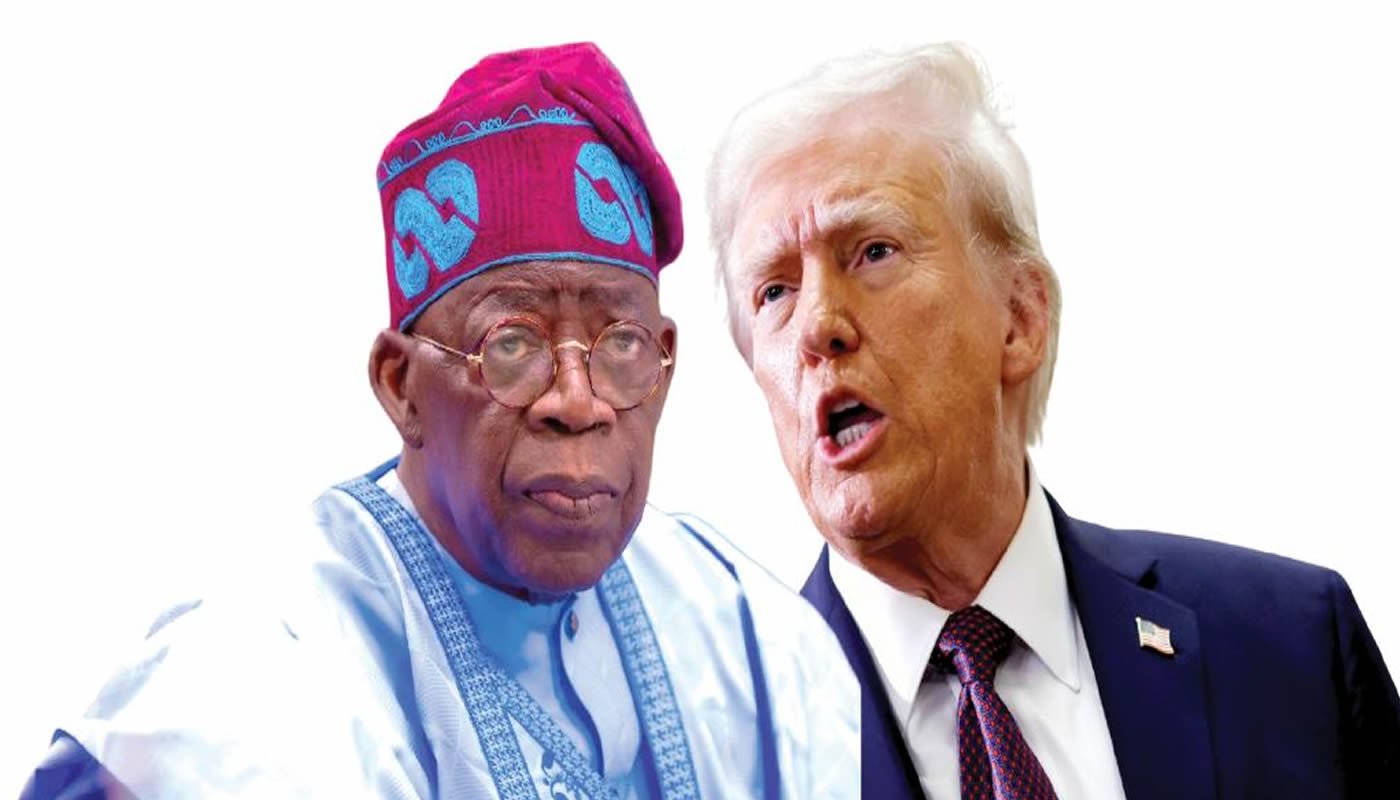
Abuja — President Bola Ahmed Tinubu will hold talks with U.S. President Donald Trump in the coming days to defuse a fast-escalating diplomatic crisis sparked by U.S. allegations that Christians in Nigeria are being subjected to mass, systematic killings, the Presidency said on Saturday. The disclosure came after a torrent of public accusations by U.S. lawmakers and blunt threats from the White House that have rattled Abuja.
Daniel Bwala, Tinubu’s Special Adviser on Policy Communication, posted on X that the meeting will focus on “counterterrorism cooperation and clarifying misconceptions about the nature of terrorist attacks in Nigeria.” He told followers that both leaders “share interests in the fight against insurgency and all forms of terrorism,” and that differences over whether the violence is religiously targeted would be discussed and resolved when the presidents meet — either at the State House or the White House.
What set the fuse was a campaign in Washington led by Republican Congressman Riley Moore, who in early October urged Secretary of State Marco Rubio to redesignate Nigeria as a U.S. “Country of Particular Concern” (CPC) over alleged, large-scale persecution of Christians. Moore’s letter — packed with stark casualty estimates and accusations of government complicity — was amplified across television and social media and found rapid traction among conservative circles.
President Trump then moved from rhetoric to formal action: he declared Nigeria a CPC and publicly warned that the United States could suspend aid — and, alarmingly, called on the Pentagon to prepare plans for possible military action if Abuja “continues to allow the killing of Christians.” In a Truth Social post laced with his trademark bluntness, Trump said U.S. intervention could be “fast, vicious, and sweet,” and ordered the Department of Defense to map options. The pronouncement provoked immediate outrage in Abuja.
Nigeria’s response was swift and unequivocal. The Presidency rejected characterizations of the violence as a one-sided “Christian genocide,” stressing instead that the country faces complex security threats — Boko Haram and ISIS-linked elements in the northeast, rampaging bandits, and deadly clashes between herders and farming communities — that have claimed lives across religious lines. Officials insisted Nigeria welcomes international assistance against Islamist insurgents so long as its sovereignty and territorial integrity are respected.
Why this matters: the U.S. is both a major security partner and arms supplier to Nigeria. Bwala noted that past U.S. approvals of arms sales helped Nigeria’s counterterror operations and that Tinubu has “utilised that opportunity” with “massive results to show for it.” Any move by Washington to halt aid or punish Abuja could undercut cooperative campaigns against groups the U.S. and Nigeria both name as security threats. But the sudden talk of intervention and public denunciations have frayed trust — and made the bilateral relationship volatile.
International and local analysts warn the facts on the ground are more tangled than the political theater suggests. Independent reporting and security analysts say the violence in Nigeria is driven largely by geography, criminality and long-running insurgencies — not a straightforward, centrally directed religious extermination. Both Muslims and Christians have been victims, and many attacks target communities, infrastructure and security forces rather than explicitly religious institutions. That nuance has been lost in the louder headlines and partisan messaging out of Washington.
Still, for many Nigerians — especially communities that have suffered church attacks or kidnappings — Washington’s posture is confirmation of long-held fears. For parts of the U.S. political base, the issue is also a potent cultural wedge. The result: a combustible mix of human tragedy, domestic politics in two capitals, and a diplomatic standoff that could have real consequences for security cooperation.
What to watch next: the timing and venue for the Tinubu-Trump meeting; whether the meeting produces concrete steps to improve intelligence and joint operations against Islamist insurgents and criminal networks; and whether Washington modifies, sustains or escalates its CPC designation and any associated sanctions or aid suspensions. Analysts will also be watching whether U.S. lawmakers who pushed the CPC designation press for punitive measures that would force Nigeria to accept American military options or else lose crucial support.
For now, Abuja is playing a dual script: publicly rejecting any suggestion of state-sponsored religious targeting while inviting diplomatic and technical cooperation to tackle the very insurgents whom both countries identify as a threat. Tinubu’s meeting with Trump — a rare, high-stakes tête-à-tête — is meant to reset the tone, and possibly to stop a spiralling confrontation before it damages both security operations and Nigeria’s sovereign standing.