
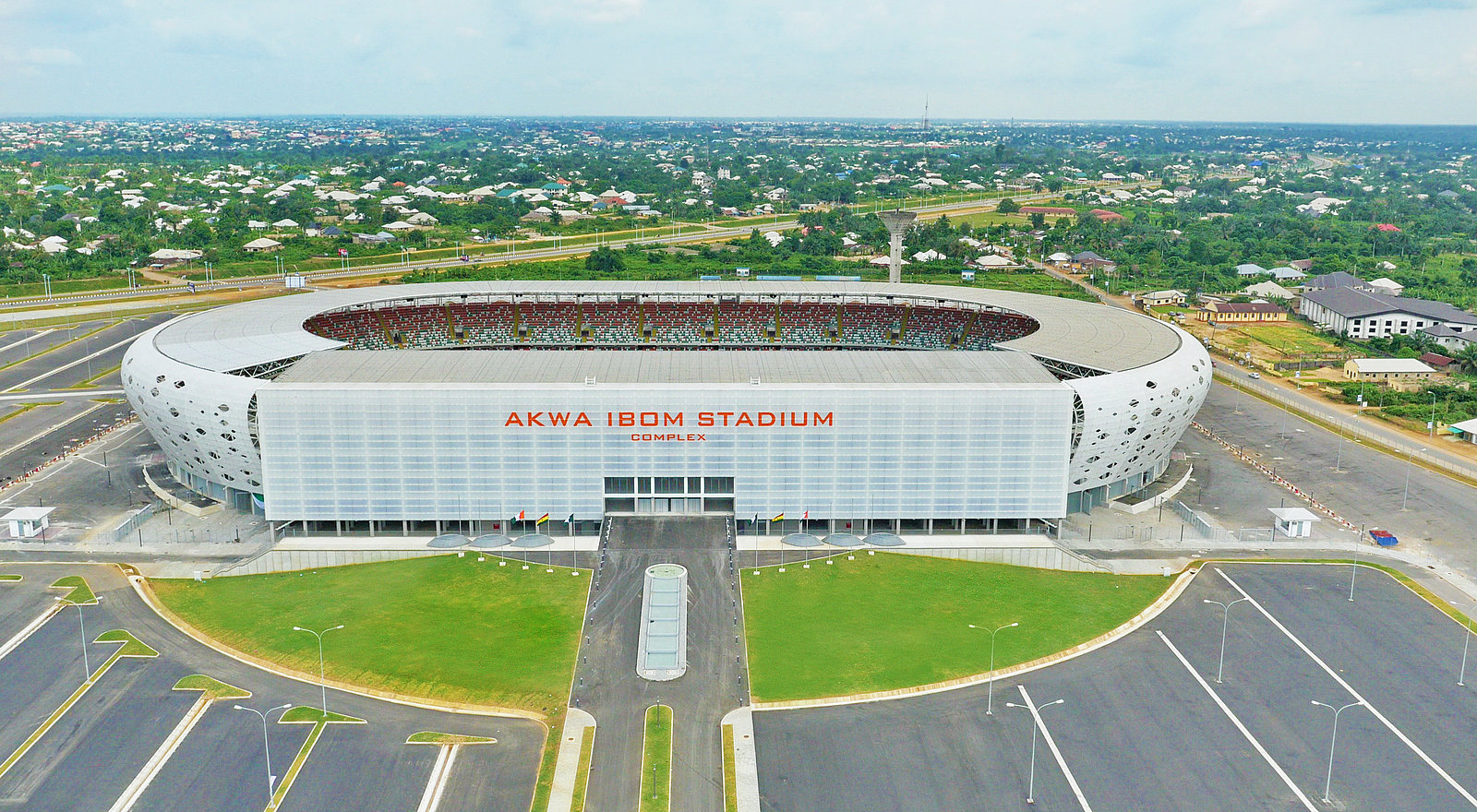
In blunt terms: Nigeria still has a sports-infrastructure problem. But for now, one shining exception rises above the rust and neglect—Godswill Akpabio International Stadium in Uyo (aka the “Nest of Champions”) remains one of the few things done right.
What happened
The Confederation of African Football (CAF) has confirmed that the Godswill Akpabio Stadium retains its standing amongst the continent’s top football facilities—and crucially, is one of only two Nigerian venues approved for international/continental matches in the 2025-26 season.
(sportsration.com)
Other Nigerian stadiums? According to CAF’s recent listings, most fall short of required infrastructure, safety, or facility standards.
(africasport.net)
What this means
- Nigeria’s club teams entering CAF competitions must now rely on fewer venues that meet the mark.
(sportsration.com) - For Uyo and Akwa Ibom State, this is a rare win: a facility that can host major matches.
- For the rest of the country, it’s an indictment: plenty of stadiums, very few that pass CAF muster.
Official reaction
Paul Bassey (Sports Commissioner, Akwa Ibom) publicly applauded the government’s continued investment in the stadium and infrastructure maintenance. He pointed to recent hosting of the national team (the Super Eagles), CAF Champions League games and even a mega-concert as markers of the facility’s relevance.
(thisdaylive.com)
He specifically praised Umo Eno, Governor of Akwa Ibom, for “unwavering commitment” and timely release of funds for upkeep.
(thisdaylive.com)
Background info you should know
- The stadium was constructed by Julius Berger PLC between 2012-2014, opened in 2014, seats about 30,000, and has been modelled (visually) in part after Germany’s Allianz Arena.
(Wikipedia) - It was previously singled out by CAF when the country’s then-federal national stadium failed inspection; the Abuja facility (Moshood Abiola Stadium) was deemed unfit.
(guardian.ng) - In January 2025, Akwa Ibom began a rehabilitation plan for the stadium to address wear and pitch issues.
(guardian.ng) - In July 2025, the state renewed Julius Berger’s maintenance contract for the stadium.
(sports247.ng)
The numbers & recent listings
- For the 2024-25 season, some media said only Uyo’s stadium met CAF club competition standards in Nigeria.
(africasport.net) - For 2025-26, at least two Nigerian venues (Uyo & Abuja) were listed by CAF as approved.
(sportsration.com)
What’s next for Uyo
The Nest of Champions is set to host more high-profile games. With CAF standards cleared, the attention turns to:
- keeping the pitch, surfaces and facilities in top shape;
- ensuring logistics, security and match operations meet international demands;
- leveraging this status into economic spin-offs (tourism, events, rentals) as the Akwa Ibom government hopes.
Why this matters beyond football
In Nigeria, infrastructure promises are many—but actual world-class delivery? Rare. That Uyo has a stadium meeting CAF’s benchmark shows two truths:
- It is possible to build and maintain a facility up to international standard in Nigeria.
- Most of the country is still failing to meet minimum requirements.
That latter point echoes what CAF and facility-inspectors have repeatedly flagged: sub-standard pitches, safety issues, insufficient amenities, neglected maintenance.
(guardian.ng)
Bottom line (without the fluff)
Uyo’s Godswill Akpabio Stadium continues to be Nigeria’s leading light in stadium infrastructure—good job Akwa Ibom. But the rest of the country should sit up: if you’re not able to qualify your stadium for CAF matches, you’re losing both sporting and economic opportunities.
Journalists, fans and sports administrators: keep watching what happens in Uyo. Also keep asking: when will Lagos, Port Harcourt, Abeokuta—or any of the other “big cities”—get on the CAF-approved list? Nigeria deserves more than just one shining example.