
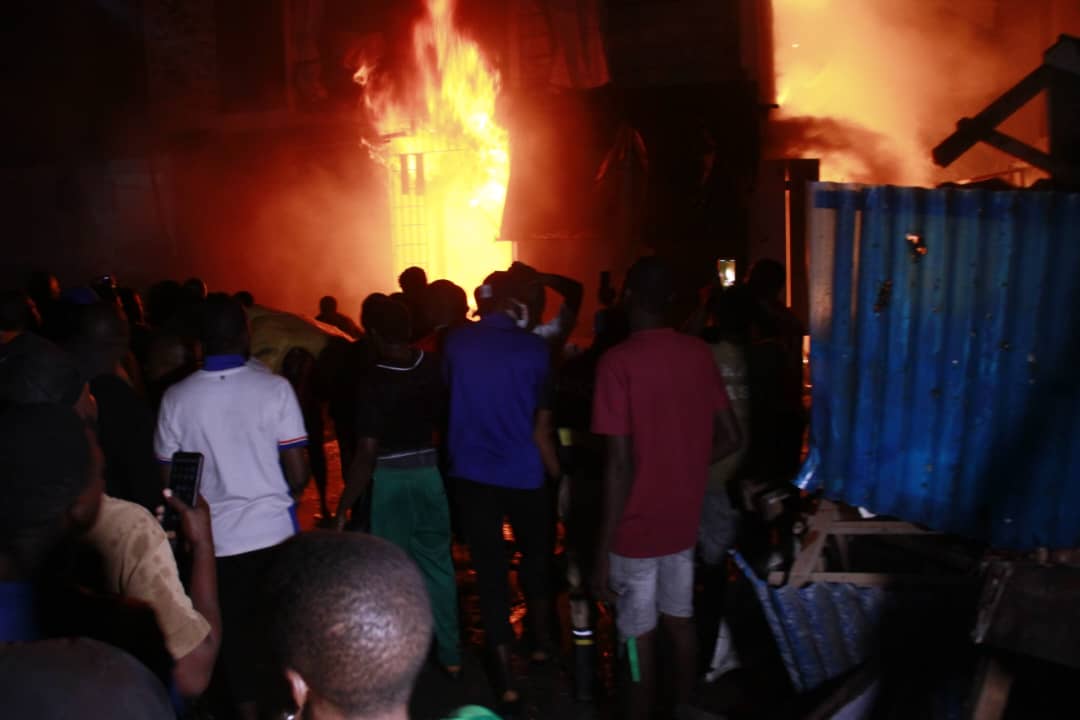
In the dead of night — around 3:43 a.m. on Friday, November 28, 2025 — chaos flickered to life at Nkwo Enugu-Ukwu Market Square in Njikoka Local Government Area, Anambra State. A fire, said to have erupted from electrical sparks triggered by a sudden power surge, tore through shops dealing in provisions and roofing materials before burning itself out. Within the hour — by roughly 4:46 a.m. — the blaze was extinguished by firefighters from the Anambra State Fire Service. No lives were lost, but the financial wreckage for traders is already being counted.
Another Disaster, Same State
This isn’t an isolated event — in fact, this marks at least the sixth major fire incident recorded in Anambra in under a week.
- A petrol-laden tanker exploded near Ozubulu, close to the Ekwusigo LGA Secretariat, killing one person and incinerating six nearby shops.
- Midweek, a factory fire in Nnewi destroyed machines, raw materials, finished goods, and vehicles, with losses reaching into the billions of naira.
- Earlier in the week, several shops in a multi-storey commercial building at Nodu Market, behind Juhel Pharmaceutical Company in Awka South LGA, were also gutted.
This is not “just another fire.” It’s a pattern — a dangerous one.
What Happened This Time
According to the Fire Service, the distress call came in at 3:43 a.m. Friday. Firefighters arrived minutes later and began a suppression operation that concluded by 4:46 a.m. The source of the inferno was traced to sparks from an electrical appliance following a sudden power surge.
Official reports say destruction was confined to a single shop. But one trader, who requested anonymity, tells a harsher version. By the time shop owners arrived after frantic phone calls, the flames had already consumed multiple shops and roofing materials — extremely flammable and easily wiped out by fire. The financial damage, he said, is staggering.
Why This Matters
First: these aren’t mere “shops.” They’re livelihoods — the daily hustle and backbone of the state’s commercial pulse. When a market burns, it sends shockwaves through the entire local economy.
Second: fire incidents don’t multiply this fast by accident. Six fires in less than a week points to a deeper problem — substandard wiring, poor market planning, unchecked power fluctuations, and little to no fire safety enforcement.
Third: every shop lost means disrupted supply chains, job losses, and thousands of naira in goods disappearing in minutes. For a state heavily dependent on small business, the ripple effect hits hard and fast.
What the Fire Service Says — and What Should Happen
The Fire Service maintains that its crew responded swiftly, contained the flames effectively, and ensured zero casualties. They have advised market traders to carry out urgent and thorough electrical inspections — and ensure no appliance or wiring is left unchecked.
Important, yes — but insufficient.
This moment demands structural intervention: state-backed fire audits, enforced electrical standards, routine inspections, and safety compliance that isn’t optional.
A State Under Fire — Literally
When you zoom out, this isn’t a one-off tragedy. It’s a wave: tanker explosions, factory infernos, market blazes — all within days.
If nothing changes, traders and everyday residents — the real drivers of commerce and survival — will continue paying the price, one fire at a time.
Anambra deserves more than reactive firefighting. It deserves prevention, protection, and leadership that treats fires as a public emergency, not routine news.