
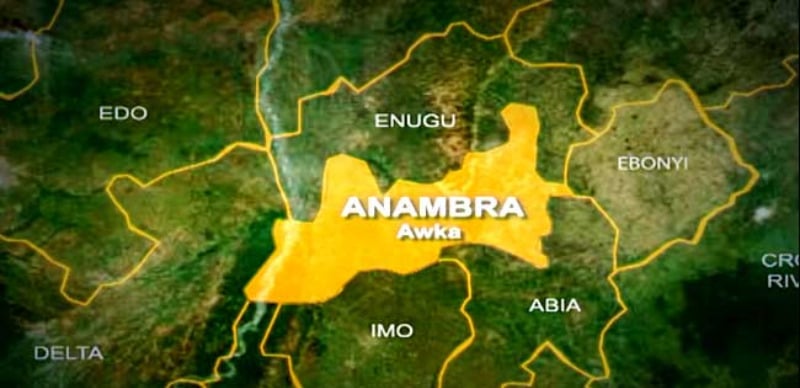
Awka – There’s a red flag flashing brightly over the electoral landscape of Anambra State: more people are registering to vote, yet drastically fewer are showing up on election day. That’s the blunt gist of the pre-election briefing delivered by Kimpact Development Initiative (KDI) under its NEVER project in advance of the November 8, 2025 governorship poll.
The Executive Director of KDI, Bukola Idowu, addressed a press conference in Awka, warning that despite rising voter registration numbers, voter turnout has fallen by over 58 per cent in eight years — a chilling trend for a state that once prided itself on political engagement. (TheCable)
Registration Up – Participation Down
KDI’s figures paint a story of paradox. On one hand, citizens are stepping forward to register; on the other hand, they’re increasingly staying away when it matters most. “While more citizens are registering to vote, fewer are turning out on election day,” Idowu declared, calling it “a troubling trend that points to deepening voter apathy and declining trust in the electoral process.” (TheCable)
Behind that statement lie concrete numbers: The latest report shows turnout dropping from roughly 24.8 % in 2013, to 21.8 % in 2017, and plummeting to just 10.3 % in the 2021 governorship election. (KDI Report)
In fact, the Independent National Electoral Commission (INEC) confirms: in 2013, turnout in Anambra was 25.5 %. It dropped to 20.10 % in 2017, and reached a mere 10.27 % in 2021. (INEC)
That fall — over half in a few short election cycles — is what KDI refers to when saying turnout has plunged “over 58 %.”
Geography & Logistics Intensify the Crisis
KDI’s analysis drills deeper. In the state’s northern senatorial district — while recording the highest numbers of registered voters — turnout has consistently been among the lowest. Why? The reasons include riverine communities (such as Anambra East, Anambra West and Ogbaru LGAs) with harder-to-reach polling units and high voter-to-polling-unit ratios. This creates fatigue, disenfranchisement and low participation. (TheCable)
And it isn’t simply about bush roads and boats. Insecurity plays a role — but ironically, KDI notes that historically more insecure passages in Anambra South still posted comparatively better turnout than Anambra North. That suggests the problem is far more complex than “just security threats.”
Electoral Body Readiness: Better, But Gaps Remain
On preparedness, INEC has made some strides. The commission reports that ahead of the 2025 governorship election, 98.80 % of Permanent Voter Cards (PVCs) had been collected. (INEC)
INEC chairman Joash Ojo Amupitan, SAN, described apathy as “the greatest enemy to Anambra’s democracy.” (Western Post)
However, KDI points out logistic and operational strains. Training for INEC’s ad-hoc staff ended on November 6, just two days before the election, leaving little room for mock drills or refresher sessions — unlike similar exercises in other states. The risk is procedural errors, delays or worse on election day. (Vanguard)
INEC’s deployment plan is ambitious: 5,718 polling units, more than 24,000 ad-hoc personnel, 6,879 BVAS machines, and even boats and vehicles for riverine zones. (INEC)
But as KDI notes: logistics aren’t everything. If citizens believe their vote doesn’t count, or fear intimidation, turnout will stay depressed.
Hotspots of Risk & Why It Matters
KDI’s ‘Early Warning’ map colours some LGAs in red. Aguata and Ihiala LGAs are flagged as severe-risk zones. (Guardian) Meanwhile, Nnewi North, Nnewi South and Ogbaru are “high risk”. The rest fall into a “moderate risk” bucket.
The risks? Logistical delays, voter suppression, violence, disrupted collation, and weak trust in institutions. According to KDI: “When turnout collapses, the credibility of the poll collapses.” (National Periscope)
Implications & Immediate Tasks
Here’s the bottom line: registering many voters is easy. Getting them to vote is hard — and in Anambra, the gap between registration and turnout is widening. Unless that gap is closed, the November 8 election risks being decided by a fraction of those eligible.
Some key actions KDI urges:
- Prioritise riverine and hard-to-reach LGAs for logistic support and voter outreach.
- Improve operational readiness of ad-hoc staff and ensure BVAS machines are fully functional.
- Rebuild trust in institutions — especially the electoral body and security agencies.
- Avoid intimidation and militarised show-of-force which can suppress turnout. (Sahara Reporters)
The Stakes are High
A state that continues to register voters and then watches them stay home is signalling a crisis of democracy. If citizens believe their vote won’t count or feel scared to cast it, then elections become mere formalities. For Anambra, the November 8 poll isn’t just about picking a governor. It’s a test of electoral legitimacy, civic trust and whether democracy in the state means business.
KDI will be on the ground monitoring election-day incidents; what happens next will speak not only for Anambra’s political future but also for its soul.