
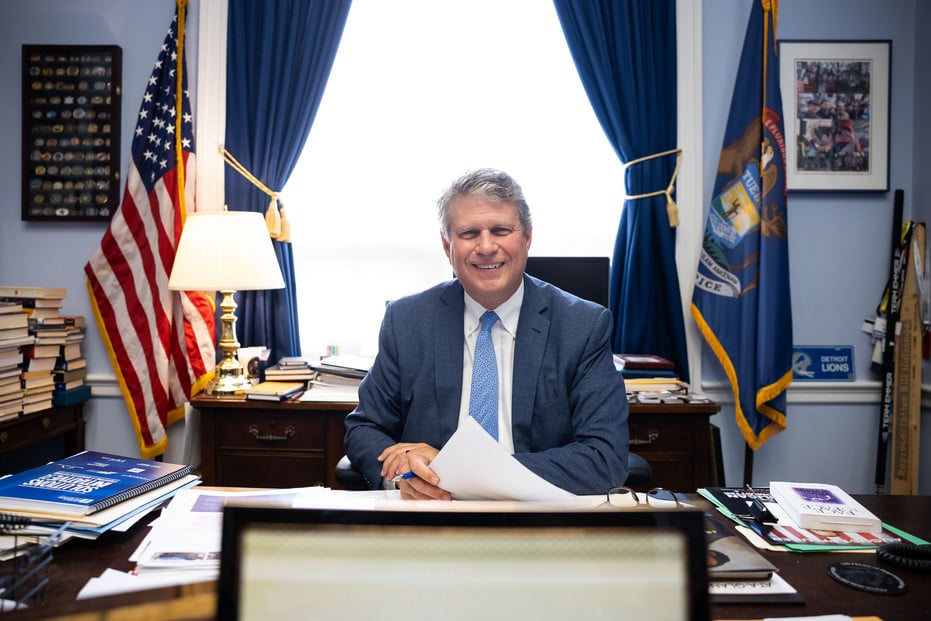
In an exchange that should shock but likely won’t—because nobody seems willing to stare the real issue in the eye—Bill Huizenga, U.S. Congressman, has publicly poured cold water on the idea that Donald Trump will blindly roll U.S. troops into Nigeria despite his bombastic threats. Meanwhile, Nigeria’s government says they’re talking with Washington—and yes, there’s more to the story than meets the eye.
U.S. Threat — Loud, Rough, But Probably Rhetoric
Remember when Trump ranted that Nigeria’s Christians were being slaughtered and ordered the Pentagon to “prepare for possible action”? [AP News] He even added his trademark flair: “guns‑a‑blazing.” [Washington Post]
Cue Congressman Huizenga. He told Arise News that yes, he was “surprised” by Trump’s comments. But he also made it plain: likely no invasion, no full‑blown military strike. [Arise TV]
“I don’t envision a surprise attack or a military response,” he said. [Daily Post]
Nor is military intervention his preferred tool. He thinks tougher economic measures—targeted sanctions, travel bans, freezing funds—will bite harder. [Daily Post]
So What’s Really Going On?
Huizenga paints the picture: there are killings in Nigeria—not just Christians, but moderate Muslims too. Fulani militants, Islamist extremists, the whole dreadful cocktail. [Daily Post]
But even he thinks the Nigerian government has been too weak or too slow responding. His message: Nigeria must show proof they are protecting all citizens—not just say “there is no issue.” [Tribune Online]
And while the U.S. may flare up with rhetoric, he says Washington’s priority isn’t necessarily boots on the ground in Nigeria. At least, not yet.
Nigeria Pushing Back — And Holding the Lobbyists Accountable
Enter Mohammed Idris (Minister of Information & National Orientation). He confirmed that Nigeria and the U.S. are in talks—communications lines are open. [VON]
Here’s where it gets intriguing. Idris claimed there’s an active link between U.S.-based lobby groups and a proscribed separatist organisation in Nigeria that is shaping the narrative fed to American policymakers. In other words: someone’s pulling strings in Washington while Nigeria takes the hit. [The Cable]
He also challenged the “Christian genocide” framing—arguing that many of the data points being used “cannot stand scientific scrutiny.” [VON]
And the Nigerian side insists the country remains constitutionally secular, multi‑faith, and that the conflict is more about criminality, land, and armed gangs than purely religious persecution. [Guardian]
So… Where Does That Leave Us?
On one side: the United States, pointing at Nigeria and rubbish‑binning the sugar‑coating—threatening serious consequences. On the other: Nigeria, saying “Hold on—there’s context you’re missing, and parts of this story are being manipulated.”
Congressman Huizenga acts as something of a mediator. He recognises the problem. He recognises Nigeria needs to act. But he doesn’t believe Washington will jump into a full war. Meanwhile, Nigeria wants to recalibrate the conversation.
Why This Mattered Yesterday — And Still Matters Tomorrow
- Security Overhaul: The violence killing Nigerians—Christians, Muslims, who‑knows‑what‑else—isn’t going away. If the talk remains about “Christian genocide” with no action, it’s hollow.
- Diplomacy vs. Domination: If the U.S. uses military threats as bargaining chips, Nigeria faces sovereignty issues. Who’s driving policy—Nigeria or Washington’s agenda?
- Narrative Warfare: When lobbyists, data‑sets, and narratives control the frame, the truth gets warped. Nigeria’s challenge: turn the frame back to the ground reality.
- Sanctions Are Real: The talk of sanctions isn’t idle. Governments and organisations will be putting pressure on Nigeria—and its officials.
- Public Trust and Government Performance: Whether you’re Christian, Muslim or none of the above—if your life is under threat and the state doesn’t protect you, the state’s legitimacy erodes.
Bottom Line
So yes: Trump yelled. Nigeria squawked back. But the arctic blast of invasion? According to the U.S. lawmaker, unlikely for now. What seems more probable is blunt diplomacy, economic pressure, and a shifting narrative on the global stage. Nigeria is in the spotlight—no matter how it plays it. The question now: Will Nigeria respond with speed, clarity, and action—before pressure becomes more than just diplomatic?