
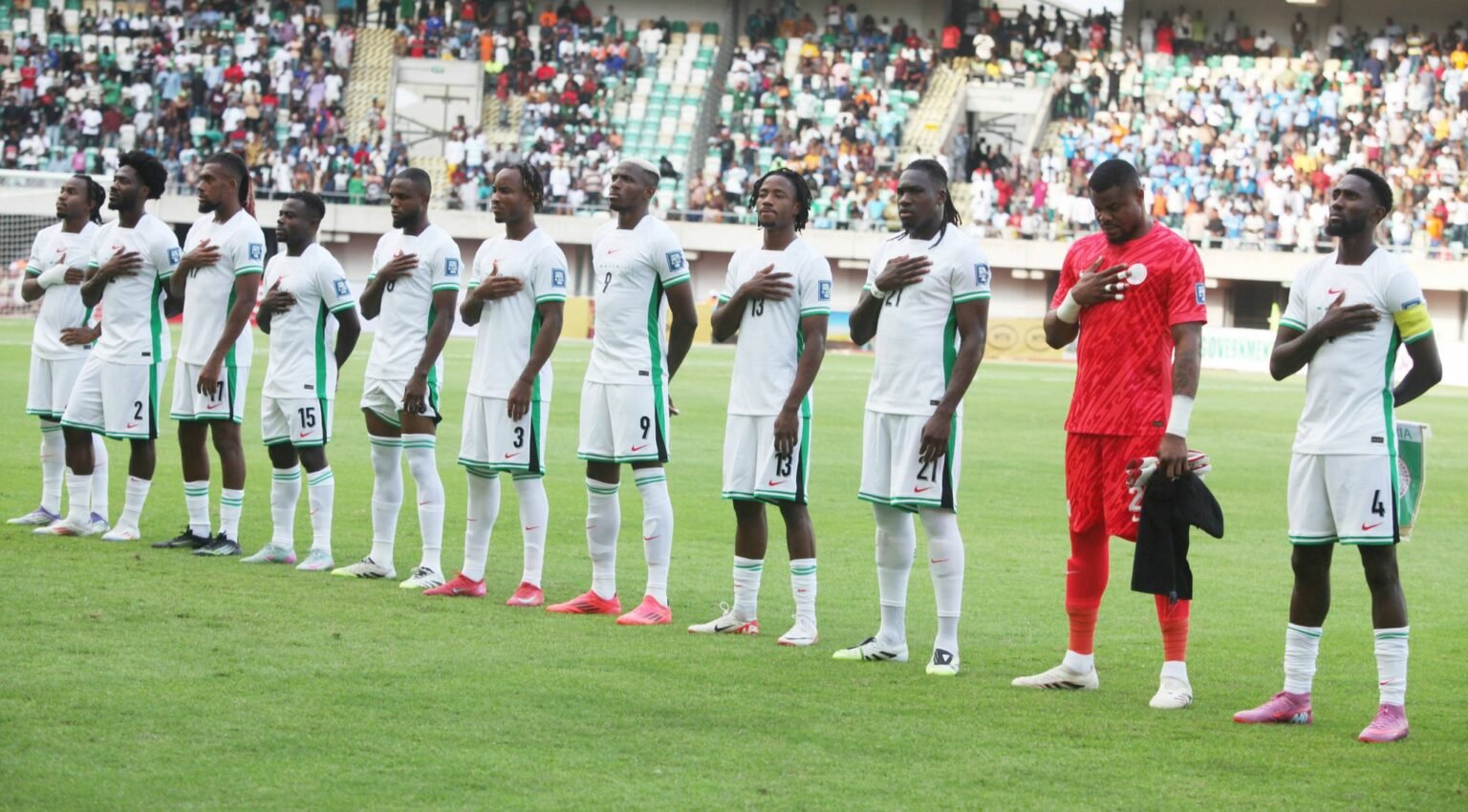
In a twist of painful irony, the Super Eagles of Nigeria have climbed three places to sit at 38th in the latest FIFA Men’s World Ranking released on Wednesday — despite failing to qualify for the 2026 World Cup.
Here’s the picture, blunt and unvarnished: Nigeria now has 1,502.46 points, placing them as the fifth‑highest ranked African team behind Morocco, Senegal, Egypt and Algeria. The ranking surge follows two competitive outings: a 4‑1 win over Gabon and a disappointing 1‑1 draw with the DR Congo national football team that ended in a 4‑3 penalty shoot‑out loss in the African play‑off.
What it means — and what it doesn’t
Yes, momentum is moving in a marginal positive direction. But make no mistake: this is consolation more than celebration.
Firstly, the climb to 38th is real. The rankings show Nigeria’s total moved from roughly 1,495.46 points to 1,502.46 – an increase of about 7 points. The rise elevated Nigeria above nations like Tunisia (40th, ~1,497.13 points) and Ivory Coast (~1,489.59) — an advantage, albeit narrow.
Yet: Nigeria remains a long way off the African summit. Morocco national football team lead the continent with 1,713.12 points — a staggering gap of over 210 points. So while 38th looks decent on paper, in reality the Super Eagles still face a steep climb if they want to be among Africa’s elite.
The back‑story of the climb
The ranking window covered 149 national‑team matches globally, including friendly and competitive fixtures. For Nigeria, that meant the high of crushing Gabon and the low of the shoot‑out defeat to DR Congo.
Worth noting: Although the shoot‑out loss knocked Nigeria out of World Cup contention, in FIFA’s ranking system the match is recorded as a draw (1‑1) — which means the victory vs Gabon carried more weight in pushing the points total up.
That makes the rise logical from a technical standpoint — but painful from a broader one: climbing the ladder without getting the prize.
Africa in focus
Let’s take a continental snapshot:
- Morocco – 1,713.12 pts: Africa’s highest‑ranked.
- Senegal – 1,648.07 pts, global rank 19.
- Egypt – 1,520.68 pts, global rank 34.
- Algeria – 1,516.37 pts, global rank 35.
- Nigeria – 1,502.46 pts, now 38th globally.
- Tunisia – 1,497.13 pts, 40th globally.
That puts Nigeria just ahead of Tunisia, but with very little breathing room. And teams like Ivory Coast remain very much in striking distance below. The lion’s share of gap remains between Nigeria’s bracket and the very top in Africa — so the work is far from done.
Why the tiny victory feels like hollow bread
- World Cup failure: The achievement in rankings cannot erase the bitterness of missing out. Nigeria’s dream of making the expanded 48‑team finals in Canada/Mexico/USA has ended in heartbreak.
- Momentum unpaid: You might rise in rankings, but what counts in the public eye is trophy, qualification, success on the field. Without those, climbs feel cosmetic.
- Competition is fierce: Africa’s top slot isn’t going to be given away. Morocco aren’t standing still; Senegal aren’t standing still. That 210‑point gap is huge.
- Opportunity now: The timing matters. With the Africa Cup of Nations due in December, Nigeria have a chance to make waves — but also to disappoint again.
The lookout: what next?
Here’s what to watch for:
- AFCON performance: If Nigeria can deliver a strong showing in Morocco this December, that could translate into a higher ranking — and more importantly, rebuild national pride.
- Closing the gap: A rise to 38th is fine, but the leap to say top 25 is another level. That would require consistent competitive results, not just friendly wins.
- Real impact vs cosmetic climb: The fan base will care less about rankings and more about performance. If the rise doesn’t translate into tangible success, the narrative may turn: “We rose but we still failed.”
- Use the ranking as springboard: The higher ranking gives Nigeria marginally better draws, perception boost, morale bump — but only if converted into wins.
Bottom line
The Super Eagles’ climb to 38th in the FIFA rankings is a win — albeit a small one, a consolation prize, not the trophy. It tells a story of “we did enough to move up” but “we didn’t do enough to truly succeed.” For Nigeria, the question now is whether this moment signals a restart — or simply a fractionally better position before another stumble.
For all the numbers and positioning: the journey ahead is still steep. The real test will be whether Nigeria can take this ranking rise, turn it into results, and shrink that 210‑point gap to the African leader. Because in this business, if you ascend in rankings but not in outcomes, you’re just climbing the ladder of fans’ goodwill — and goodwill, in Nigerian football, does not last forever.