
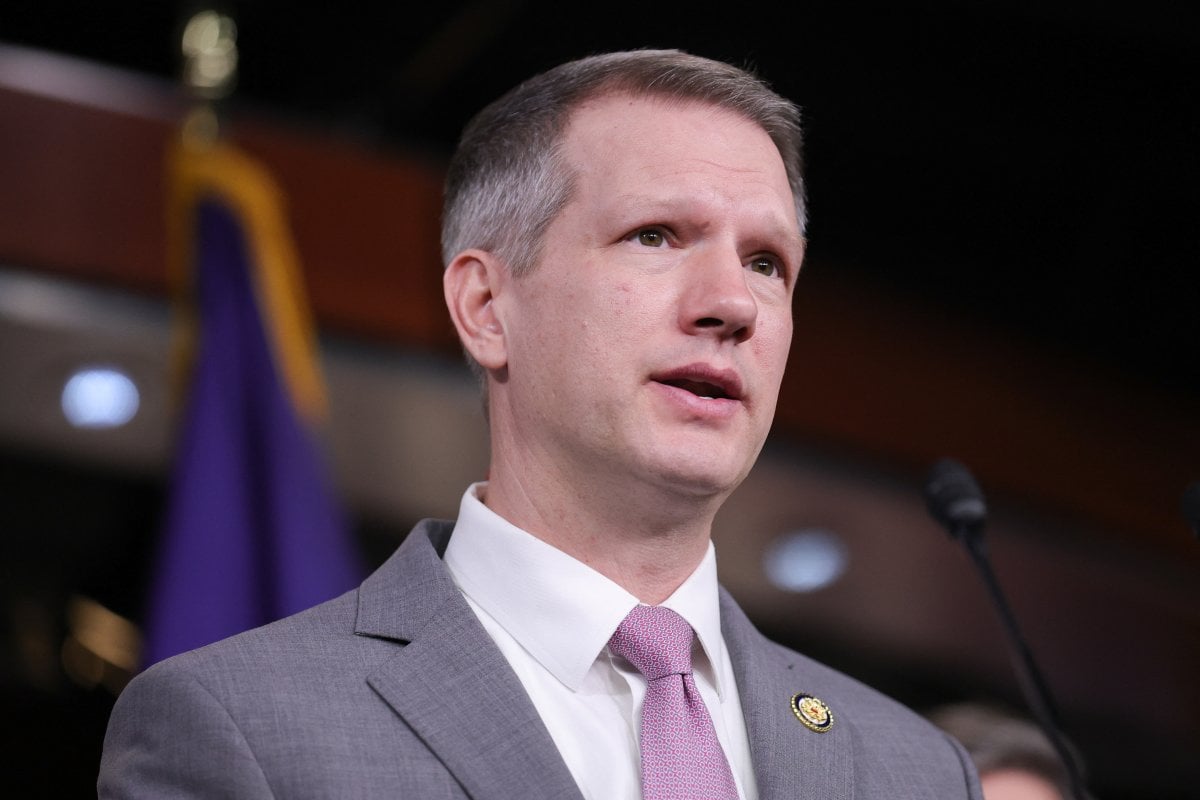
A delegation from Nigeria’s security and political leadership, led by National Security Adviser (NSA) Nuhu Ribadu, held a tense, high-stakes sit-down in Washington, D.C., with U.S. Congressman Riley M. Moore. At the heart of the meeting: the escalating persecution of Christians and the relentless terror threat sweeping Nigeria — and America’s growing impatience.
According to multiple sources, Moore didn’t mince words — he slammed the violence targeting Christians as unacceptable and called for “tangible steps” from the Nigerian government. He reiterated his push to deepen U.S.-Nigeria cooperation, but made clear that more than words are now required.
“The Deadliest Place for a Christian” — Moore’s Stark Warning
Moore, known for his vocal opposition to Christian persecution globally, made his case forcefully. In his view, Nigeria has become “the deadliest place in the world to be a Christian.” He points to staggering figures: over 7,000 Christians killed in 2025 alone — a shocking average of 35 per day. He also referenced long-term data showing that 19,000+ churches have been destroyed since 2009.
In a bold move, Moore is calling on the U.S. State Department to redesignate Nigeria as a “Country of Particular Concern” (CPC) — a status reserved for nations that commit or tolerate systematic violations of religious freedom. Furthermore, he’s urging Washington to withhold arms sales and technical support to Nigeria until the government visibly changes course.
The Nigerian Delegation: High Profile, High Stakes
The Nigerian side wasn’t low-level. NSA Nuhu Ribadu led a heavyweight team that included:
- Bianca Ojukwu, Minister of State for Foreign Affairs
- Kayode Egbetokun, Inspector General of Police
- Lateef Fagbemi, Attorney-General of the Federation
- Gen. Olufemi Olatunbosun Oluyede, Chief of Defence Staff
- Lt. Gen. E.A.P. Undiendeye, Chief of Defence Intelligence
- Idayat Hassan, Special Adviser to the NSA
- Ambassador Ibrahim Babani I, Director of Foreign Relations, ONSA
- Ambassador Nuru Biu, Acting Chargé d’Affaires, Embassy of Nigeria
- Paul Alabi, Political and Economic Section, Embassy of Nigeria
Their mission: defend Nigeria’s record, explain counterterrorism efforts, and make the case for cooperation — not confrontation.
Nigeria Pushes Back Hard
Back home, the Nigerian government slammed Moore’s accusations as baseless and “politically motivated.” According to Foreign Affairs officials, the country does not “deliberately indulge a particular religion to exterminate the other.”
Information Minister Mohammed Idris went further, calling the data used by Moore “faulty” and arguing that the violence Nigeria faces is primarily terrorism — not a targeted war against Christians. Chief of Defence Staff General Olufemi Oluyede echoed this: the government is battling extremist groups, not persecuting a religion.
The Stakes: Aid, Arms, and America’s Moral Line
This isn’t just about calling out atrocities — Moore is dangling serious diplomatic leverage. He and U.S. President Donald Trump have already pushed for Nigeria’s return to the CPC list, and the congressman is leading a congressional investigation into the killing of Christians. Suspend aid, cut technical support, or risk public pressure: those are real possibilities on the table.
Moore argues this is not just a moral fight, but a strategic one. The U.S. says it’s ready to help Nigeria dismantle terrorist groups like Boko Haram and ISWAP — but insists that “protection of religious minorities” must be part of the deal.
Why This Matters: Beyond Politics, Into Identity
- Religious crisis or security crisis? The Nigerian government insists it’s primarily battling terrorism. The U.S., through Moore, frames the violence increasingly in religious terms — especially when Christian communities are disproportionately affected.
- Diplomatic leverage: By pushing the CPC status, Moore isn’t just raising alarms — he’s threatening real consequences.
- Global spotlight: Christian persecution in Nigeria is no longer a local issue — Washington is making it a foreign policy problem.
This showdown in Washington is more than a photo-op. It’s a test of how far the U.S. is willing to go when moral outrage meets national security. And for Nigeria, it’s a wake-up call: the world is watching — and Congress says it’s not just talking anymore.