
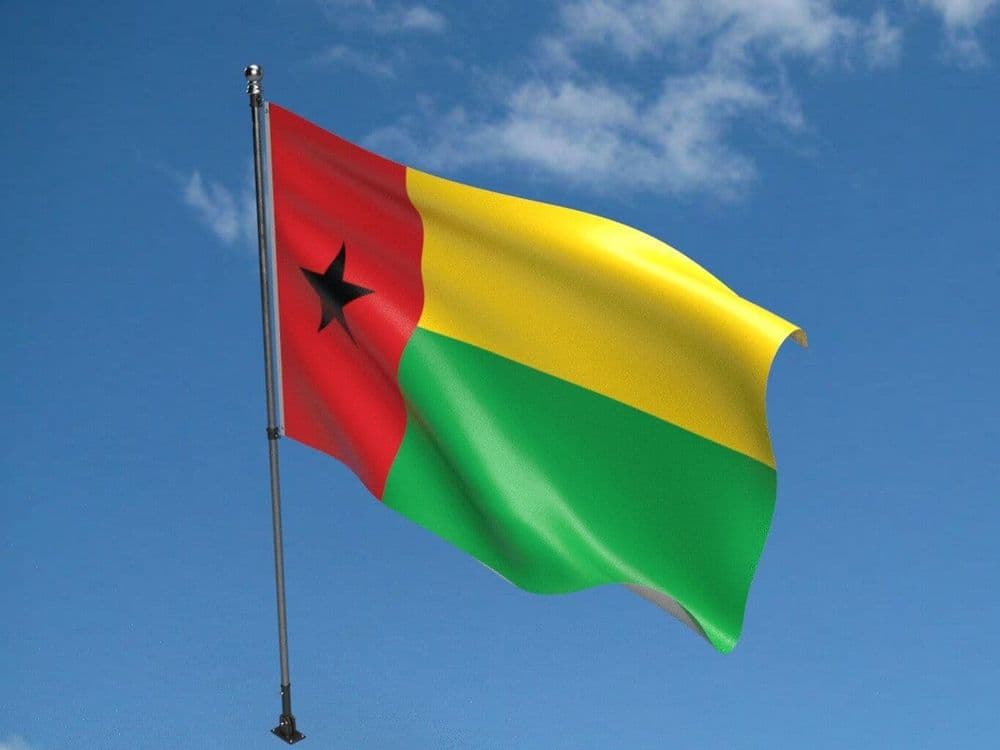
Soldiers in Guinea-Bissau announced Wednesday that they have taken full control of the country — arresting President Umaro Sissoco Embaló and suspending the ongoing election process, plunging the West African state into yet another crisis.
Chaos rocks Bissau — shots fired, panic spreads
Fresh gunfire erupted near the presidential palace and the headquarters of the electoral body in the capital, Bissau, around midday Wednesday. Witnesses described scenes of confusion — hundreds of residents, on foot and in vehicles, scrambled for safety as bullets rang out.
Minutes later, uniformed soldiers sealed off main roads, erected checkpoints, and made their way to the Presidential Palace. Almost immediately, a statement flashed on state television: the army had deposed the president, taken control of state institutions, shut down media outlets, closed borders — and imposed a curfew.
“The High Military Command for the Restoration of Order” takes over
The coup-makers — a group of high-ranking officers — said they formed the High Military Command for the Restoration of Order, which would govern “until further notice.” They framed their takeover as a pre‑emptive move to prevent a suspected plot to manipulate election results, involving politicians, a drug lord and foreign operatives.
At the same moment, Embaló (now ousted and reportedly under guard at military headquarters) confirmed the deposition in a phone interview with France 24 — saying only “I have been deposed,” and making no claims of harm.
A disputed election — chaos long in the making
This coup didn’t happen in a vacuum. The military move comes just days after a controversial general election on November 23 — the first since Embaló dissolved parliament in 2023. The main opposition party was barred from contesting, and the only two frontrunning candidates — Embaló and Fernando Dias da Costa — both prematurely declared victory. The official results were due Thursday.
Civil society, domestic observers and regional actors had already questioned the legitimacy of the vote long before ballots were cast. International uproar over the opaque process was growing — but no one expected the army to intervene so violently.
Old wounds reopen: Guinea‑Bissau’s repeated dance with coups
This is not new for Guinea‑Bissau: since independence in 1974, the country has undergone at least nine coups or attempted coups — making it one of Africa’s most coup-prone states.
Embaló’s presidency was already under heavy strain. The 2023 dissolution of parliament, allegations of tightening authoritarian control, and several aborted coup attempts had left his grip on power fragile. Many had warned that the November election risked pushing the country over the edge. Now, one more chapter has been added to the long list of broken promises and broken institutions.
What we know — and what remains uncertain
Known:
- Military claims “total control” — borders closed, media silenced, institutions suspended.
- Embaló says he’s been deposed and is being held at military headquarters.
- Election results are on hold indefinitely — the tallying process is suspended.
Unknown:
- What becomes of opposition figures, or whether the army will release any provisional results.
- If there were casualties from the morning gunfire — no independent confirmation has surfaced.
- When, or if, constitutional order might be restored — the junta has given no timeline, only demanded calm and suspended normal governance.
A repeat — and a warning
Guinea‑Bissau has rolled through dictatorships, short-lived despots, civil war, broken pacts and repeated betrayals of democracy. Once more, a country left battered and betrayed by those meant to protect it.
Only this time, the guns sounded before the results — not after.