
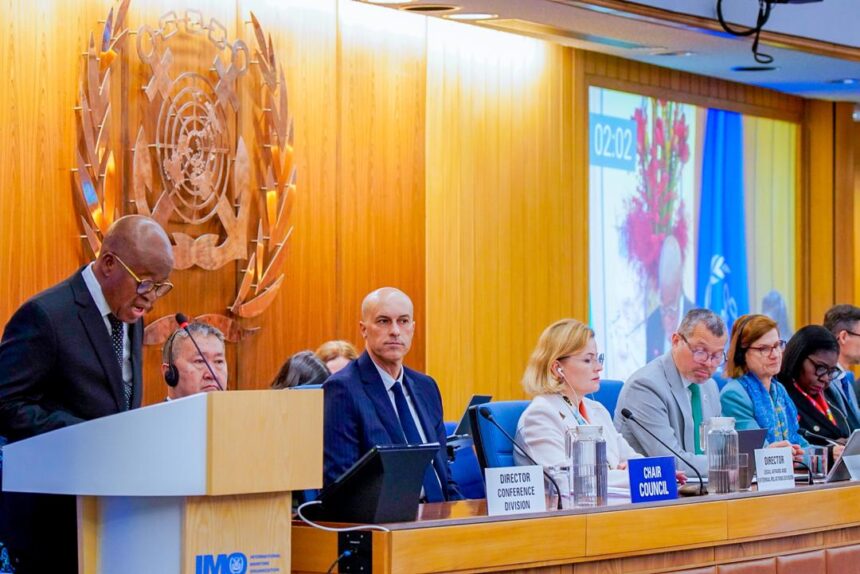
After more than a decade in maritime wilderness, Nigeria is back where it belongs — at the high table of global shipping governance. On November 28, 2025, at the assembly of the International Maritime Organization (IMO) in London, Nigeria clinched a seat in Category C of the IMO Council, ending a 14-year absence from the body that sets the rules for global maritime transport.
A Hard-Fought Win
The Council election was no walk in the park. Nigeria’s bid was fiercely contested — 26 countries threw their hat into the ring for just 20 Category C slots. But when the dust settled, Nigeria emerged with 116 votes. In doing so, the country outpaced other contenders — including names like Denmark, Kenya, and Bangladesh.
With this vote, Nigeria joins 19 other nations in Category C, all recognised for significant maritime and navigation interests. The full list includes: Bahamas, Belgium, Chile, Cyprus, Egypt, Finland, Indonesia, Jamaica, Malaysia, Malta, Mexico, Morocco, Nigeria, Peru, the Philippines, Qatar, Saudi Arabia, Singapore, and South Africa.
The other seats fell as expected:
- Category B — reserved for states with heavy involvement in global seaborne trade — went to Australia, Brazil, Canada, France, Germany, India, Netherlands, Spain, Sweden, and the UAE.
- Category A — dominated by major shipping service providers — returned China, Greece, Italy, Japan, Liberia, Norway, Panama, South Korea, the United Kingdom, and the United States.
Nigeria’s Comeback: What Changed
This win isn’t some fluke or hand-shake favour — it’s the result of deliberate, sustained diplomacy. The campaign was led by Adegboyega Oyetola, Minister of Marine and Blue Economy, who spent more than a year navigating diplomatic corridors, engaging maritime blocs and promising a Nigeria reborn as a responsible maritime power.
Nigeria secured high-profile endorsements along the way, including formal backing from the government of Switzerland. Industry experts had long argued that Nigeria was overdue for this return, pointing to substantial improvements in security and maritime governance across the Gulf of Guinea.
The strategy was systemic: early campaign launch at IMO headquarters in London, creation of an inter-ministerial committee chaired by Permanent Secretary Olufemi Oloruntola, and aggressive partnership-building with global maritime stakeholders.
What This Means for Nigeria — And Why It Matters
Nigeria once again holds a seat where the rules of global shipping — safety, navigation, environment, regulation — are shaped. This brings leverage, visibility, and influence in decisions that affect the Gulf of Guinea and the wider African maritime space.
For port reforms, shipping companies, dry docks, maritime security, and the blue-economy agenda, this is a major boost. Investor confidence is expected to rise now that Nigeria is plugged directly into the centre of global maritime policymaking.
For the Tinubu administration, it’s a diplomatic victory. This is tangible evidence that the blue-economy initiative is gaining international traction and moving Nigeria from a passive participant to an active policymaker in maritime governance.
The Promise — Keep Eyes on Implementation
In his reaction, Minister Oyetola framed the victory as a global endorsement of Nigeria’s maritime reforms and anti-piracy momentum. He pledged that Nigeria would use the seat to strengthen global maritime governance, support sustainable ocean management, and push for safer seas.
He credited President Tinubu’s backing and praised the Technical Committee led by Oloruntola for accomplishing what seemed impossible just a few years ago.
But the real test starts now. A seat on the Council is valuable only when backed by solid reforms, institutional strength, port modernization, transparent governance, and consistent engagement. Nigeria has regained the world’s trust — now it must sustain it.