
Dar es Salaam, Tanzania – The African Union (AU) has pulled no punches: the 29 October 2025 general election in the United Republic of Tanzania failed to adhere to basic democratic standards, according to the AU’s preliminary mission report. (peaceau.org)
Deploying 72 observers from 31 African countries, led by former Botswana President Mokgweetsi EK Masisi and Nigeria’s ex-Foreign Minister Geoffrey Onyeama, the AU mission was on the ground from 14 October to 3 November. (peaceau.org)
Their verdict: this was not a free, fair, competitive election.
What the AU Observers Saw
- “Ballot-stuffing at several polling stations,” with voters reportedly receiving multiple ballots and some being allowed to vote without identity verification. (arabnews.com)
- Opposition agents and independent observers blocked from getting clear sight of the count and in some cases asked to leave early. (aljazeera.com)
- A legal and institutional framework that actively stacked the deck: constitutional clauses barring independent candidates and making presidential results unchallengeable; also, senior public officers appeared to influence the electoral commission’s work. (theeastafrican.co.ke)
- A nationwide internet blackout on election day — draconian shutdown of communication, widely seen as an attempt to control information flow. (au.int)
- Abductions, intimidation, and a stiff-armed security presence. The AU “mission regrets damage to property” and urges “thorough investigations” into violence and human rights abuses. (peaceau.org)
In plain language: citizens didn’t get a level playing field, and the process was compromised.
Opposition Shut Out, Landslide Declared
Incumbent President Samia Suluhu Hassan, who first became president in 2021 following the death of John Pombe Magufuli, was officially awarded nearly 98% of the vote. (aljazeera.com)
Yet two major opposition parties – Chama Cha Demokrasia na Maendeleo (Chadema) and ACT-Wazalendo – were effectively sidelined. Chadema opted out after refusing to sign the electoral code; ACT-Wazalendo had its candidate disqualified by the attorney-general. (peaceau.org)
Then there’s the wider regional cop: Southern African Development Community (SADC) released a scathing preliminary assessment, calling the election “intimidation, arrests and internet shutdown” and the playing field “uneven”. (allafrica.com)
Streets Erupt – Blood, Fire and a Digital Blackout
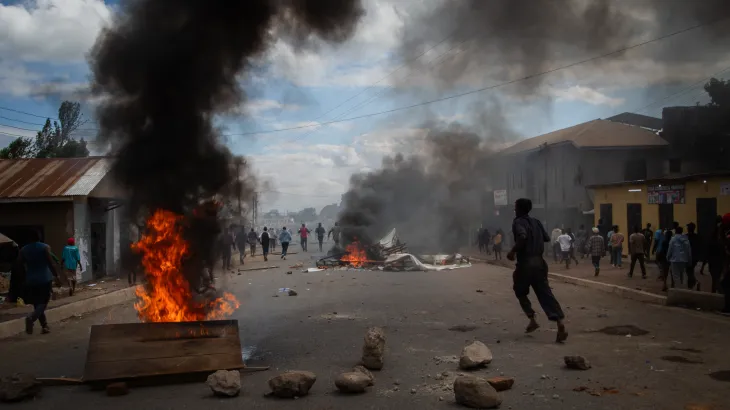
On polling day and in the days that followed, tensions boiled over. Protests erupted in major cities like Dar es Salaam, blocked roads, burning tyres, and videos surfaced of security forces firing live rounds. (theguardian.com)
Citizens say hundreds—some claim more than a thousand—died under government crackdown. The government rejects the higher numbers as exaggerated. (apnews.com)
Meanwhile, internet services were cut, curfews imposed, and normal life flickered under a heavy security shadow. (apnews.com)
What the AU Recommends – And What It Missed
The wording of the AU’s findings is systematic: this election “did not comply with AU principles, normative frameworks and other international obligations and standards for democratic elections.” (allafrica.com)
They call for urgent constitutional and electoral reforms: ensuring independent oversight, enabling genuine competition, revising laws to allow independent candidates, and guaranteeing results are challengeable in court. (peaceau.org)
The mission notes it could not observe everything: violence and internet shutdowns hindered full coverage. Final, detailed findings are due in two months. (peaceau.org)
What This Means for Tanzania
- The ruling party’s grip tightens: An election that excludes major challengers, runs under a legal regime stacked in favour of incumbents and rolls out near-total control of information and space.
- The façade of “win with 98%” now meets serious credibility questions.
- Civil society and citizens face a high-stakes environment: protests, digital blackout, crackdowns—all in response to what many say is a sham.
- Regionally and internationally, Tanzania’s democracy badge just took a hit. With both AU and SADC critical, the country now faces pressure—not just from within but from its neighbours and the continent’s governance watchdogs.
Bottom Line
This wasn’t just an “imperfect election,” according to observers. It crossed lines. The AU mission’s findings show a process compromised and orchestrated more than contested. The question now: will the Tanzanian government respond with meaningful reform, or will this become another case of “election in name only”?