
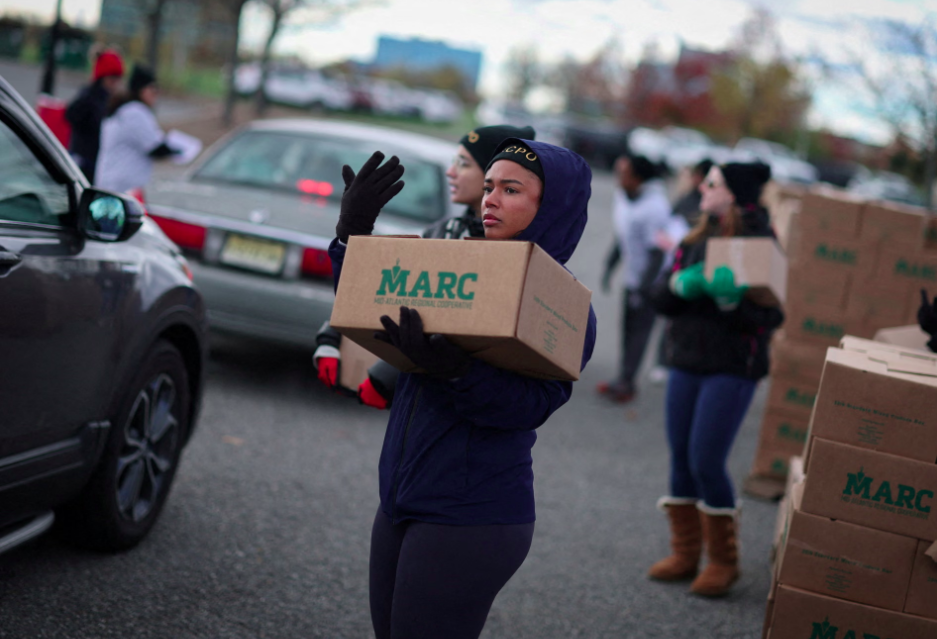
In a blunt move that could leave tens of millions of Americans struggling, the Supreme Court of the United States (SCOTUS) has allowed the Donald Trump administration to continue withholding approximately $4 billion destined for the Supplemental Nutrition Assistance Program (SNAP) — the nation’s largest food-aid initiative relied upon by around 42 million people. (The Guardian)
What just happened
On Tuesday, the court issued an administrative stay that extends a freeze on full SNAP payments — a pause initially ordered by a lower federal judge. Under that ruling, the government would have had to release the funds immediately. Instead, this stay keeps the freeze in place until midnight on Thursday, for now. (The Guardian)
The Trump administration filed for this extension, arguing that the only way to immediately resolve the impasse is for Congress to reopen the government — and until then, full SNAP funding remains stalled. (The Guardian)
Why is this significant?
SNAP is deeply embedded in America’s social-safety net. Some 1 in 8 U.S. residents depend on monthly benefits to purchase food.
The freeze is unprecedented. For the first time in the programme’s six-decade history, full monthly allocations are being delayed or cancelled amid a federal government shutdown. (Al Jazeera)
States responsible for disbursing benefits are caught in the middle. Some had already distributed what they believed were authorised payments — only to be told by the United States Department of Agriculture (USDA) that those payments were now “unauthorised” and must be reversed. (The Guardian)
In the trenches: state and local chaos
On Sunday, the USDA sent a memo to state SNAP directors: if a state had already sent full payment files for November, those were “unauthorised” and must be immediately undone. (The Guardian)
The memo warned that states could be penalised — losing federal administrative funds or even held liable for over-issuances. (The Guardian)
State governors didn’t take it quietly. Maura Healey of Massachusetts fired back: “If President Trump wants to penalise states for preventing Americans from going hungry, we will see him in court.” (The Guardian)
Similarly, Maryland’s governor Wes Moore described what’s unfolding as “intentional chaos … four different (guidance) measures in six days.” (The Guardian)
The larger backdrop: shutdown and brinkmanship
The SNAP freeze cannot be divorced from the larger fight over federal funding. The 2025 government shutdown — now the longest in U.S. history — has pushed federal programmes into turmoil and exposed the fragility of social-safety nets in American politics. (Al Jazeera)
Just this week, the Senate approved a compromise bill to reopen the government — but with major caveats and without resolving the full scope of program funding. The House now faces a key vote. (Al Jazeera)
What happens next?
- The court’s pause expires on Thursday at midnight unless extended. If the freeze holds, millions will remain in limbo.
- If Congress passes a funding bill and the President signs it, SNAP payments could be restored — but maybe not instantly. The mechanism for distributing delayed payments is complex and states are already scrambling.
- Legal battles are still ongoing. Dissenting on the court, Ketanji Brown Jackson said she would have denied the stay and allowed full benefits to proceed. (Reuters)
For the people relying on SNAP: warning signs
Some states have issued only half of November’s allotment, leaving local food banks and aid agencies under crushing pressure. With Thanksgiving looming and schools closing, the risk of a sharp rise in food insecurity is real. (The Guardian)
“It’s hard to look someone in the face who’s telling you they can’t feed their family, and be able to try to guide them to other avenues…”
— Stacy Smith, government worker (The Guardian)
The blunt takeaway
This isn’t just a legal technicality. It’s a political gamble with human lives. The highest court in America has effectively allowed, for now, the suspension of essential food aid to millions of struggling Americans — while Washington wrangles over budget figures, power plays and deadlines.
It’s bold. It’s blunt. And it puts the most vulnerable residents at the sharp end of policy. If you’re watching U.S. politics, this is a moment that screams: guardrails are failing.