
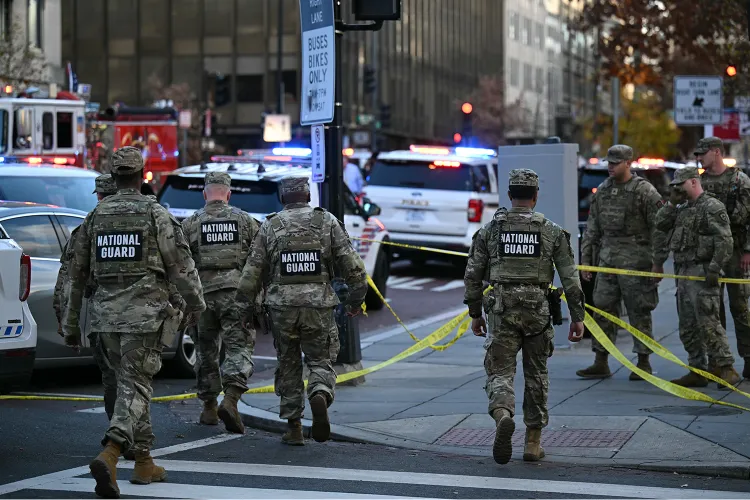
WASHINGTON — In a move that sends chill down the spine of every would-be immigrant from the Global South, U.S. President Donald Trump decreed on Thursday a “permanent pause” on migration from what he calls “Third World Countries.” The trigger? A deadly shooting near the White House that left a young National Guard member dead — and the alleged gunman, an Afghan national brought to the U.S. under a 2021 resettlement program, is now the face of Trump’s sweeping crackdown.
The Flashpoint
Days earlier, a horrific ambush outside the seat of American power left 20-year-old Guard member Sarah Beckstrom dead and another soldier critically wounded. Investigators identified the suspect as Rahmanullah Lakanwal, a 29-year-old Afghan national who entered the United States through the 2021 evacuation and resettlement programme.
That single act of violence has now become justification for a new round of sweeping immigration restrictions that could reshape U.S. policy for years.
The Freeze: Broad, Vague, and Threatening
On his Truth Social platform, Trump announced he would “permanently pause migration from all Third World Countries… to allow the U.S. system to fully recover.” He did not list any countries, define the term “Third World,” or explain how a “permanent pause” would operate under U.S. law.
What he did make clear is that the freeze would include migration cases approved under former President Joe Biden. This could affect thousands who entered legally through humanitarian, family, and resettlement pathways.
Trump also vowed to:
- End all federal benefits and subsidies for “non-citizens.”
- Denaturalize migrants who “undermine domestic tranquility.”
- Deport anyone deemed a public charge, security risk, or “non-compatible with Western civilization.”
In addition, the administration has begun reviewing green-card holders from 19 “countries of concern,” including Afghanistan, Somalia, Iran, and Venezuela.
What This Means: Fear, Chaos, and Lives in Limbo
With no implementation details provided, millions now face uncertainty. How do you “pause” migration indefinitely? What happens to asylum seekers waiting for hearings? What about people who have already been approved but have not yet travelled?
The lack of clarity translates into fear. Families bracing for reunification may see their plans shattered. Refugees who escaped conflict may face new barriers. And communities with large immigrant populations now fear a wave of detentions or deportations.
Global Pushback: “U.S. Must Honour Its Obligations”
The United Nations quickly responded, urging Washington to maintain access to asylum and respect international protections.
Farhan Haq, deputy spokesperson for the UN Secretary-General, reminded the U.S. of its commitments under the Refugee Convention. In Geneva, a UN human-rights spokesperson stressed that asylum seekers remain entitled to protection under international law and must be given due process.
The Politics: A Long-Building Agenda
This shockwave did not appear overnight. The administration had already suspended Afghan immigration processing and initiated green-card reviews for high-risk countries even before the DC shooting.
The attack did not spark the crackdown — it amplified it. It provided political fuel for measures that were already in motion.
What Happens Next
- Expect legal battles as courts and lawmakers challenge the broad language and sweeping nature of the restrictions.
- Human-rights organisations will likely push for injunctions to protect asylum seekers and legal migrants.
- Detentions and deportations may rise as federal agencies interpret the order aggressively.
- The global community will watch closely; allies and international bodies may pressure Washington to ease or clarify the freeze.
Why It Matters Beyond America
When Washington shifts immigration policy, the world feels the ripple. Refugee routes adjust. Diplomatic relationships change. Countries labelled “Third World” may find doors closing across multiple Western nations as U.S. policy influences global norms.
For Africa, Asia, Latin America, and any region fitting Trump’s undefined category, the message is blunt: borders can shut overnight. And when geopolitical decisions override human stories, the most vulnerable — refugees, families, the displaced — pay the highest price.