
In a dramatic move that has shaken diplomatic circles, South Africa has announced it will no longer accept charter flights carrying Palestinians into the country. This follows the controversial arrival of 153 Palestinians at Johannesburg’s O.R. Tambo International Airport — an incident now under official investigation.
Foreign Minister Ronald Lamola didn’t sugarcoat anything. He labeled the flight part of a “clear agenda” to cleanse Palestinians out of Gaza and the West Bank. His words were blunt, loaded, and deliberate — pointing to something far bigger than a mishandled evacuation.
The Flight That Sparked the Fire
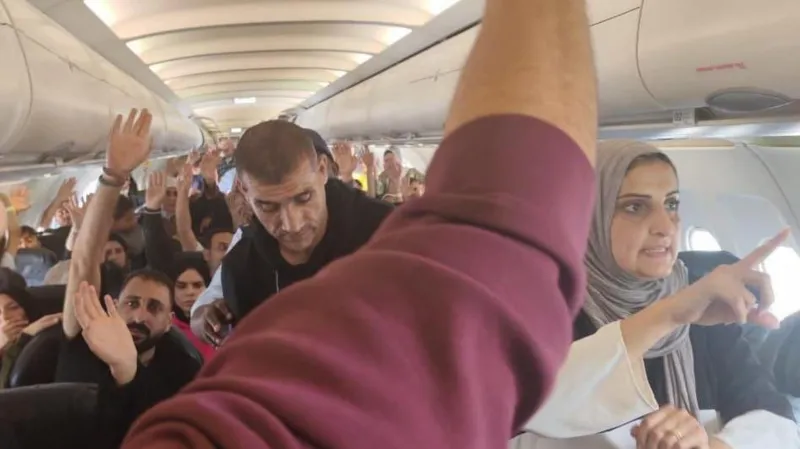
The chartered aircraft landed last Thursday after a stopover in Nairobi, Kenya. Immediately, South African immigration officers raised red flags. Passengers had no exit stamps, no clear accommodation plans, and could not provide details of where they were ultimately headed. Many had fled war zones, yet the paperwork didn’t match the story.
For nearly 12 hours, the passengers — including children and a woman nine months pregnant — remained stuck inside the aircraft. The situation eased only after humanitarian organization Gift of the Givers intervened, securing their release and temporary entry into the country. By the end of the day, 130 people were admitted on South Africa’s standard 90-day visa exemption for Palestinians. Another 23 had already moved onward to other nations.
Lamola’s Warning: “This Looks Orchestrated”
The foreign minister later addressed the media and laid out the government’s deep concerns. According to him, the flight appeared to be part of a broader, suspicious pattern — an operation designed to remove Palestinians from their land and spread them across various countries.
Lamola stressed that this was no humanitarian coincidence. He suggested a deliberate attempt by unknown entities to quietly funnel Palestinians abroad under confusing and irregular circumstances. The government has now launched an investigation, and intelligence services are digging into who organized the flight and who paid for it.
Palestinian Embassy Sounds Its Own Alarm
The Palestinian embassy in South Africa did not defend the flight. Instead, it revealed that an unregistered and misleading organization had exploited vulnerable Gaza families, collected money from them, and arranged irregular travel without proper coordination.
The embassy went further, warning Gazans to beware of such groups claiming to offer evacuation routes. It described the situation as a “lapse” and said it was working with South Africa to address the aftermath.
Israel’s Position: A Conflicting Story
Israel’s Coordinator of Government Activities in the Territories (COGAT) contradicted the South African narrative. According to Israeli authorities, the passengers left Gaza legally with approval from a “third country” willing to receive them. Days later, Israel publicly named South Africa as that third country — a claim South African officials dispute, saying no such agreement exists on record.
The conflicting statements have only deepened the mystery surrounding who arranged the flight, why, and under what authority.
The Bigger Picture: A Political Powder Keg
South Africa’s decades-long solidarity with the Palestinian struggle is no secret. From Nelson Mandela to today’s leadership, the country has been vocal against what it sees as Israeli aggression. South Africa even took Israel to the International Court of Justice, accusing it of genocide — a charge Israel rejects.
But this latest incident presents a new kind of problem: the risk of inadvertently participating in what South African officials fear could be a quiet campaign to depopulate Gaza under the guise of humanitarian relocation.
The stakes are huge. If these flights are indeed part of an orchestrated plan, the implications reach far beyond airports and visas. They touch on forced displacement, war strategy, regional politics, and global accountability.
What Happens Next?
Several key steps are now underway:
- Intelligence agencies are probing who funded, organized, and authorized the charter flight.
- The government has made it clear: no more Palestinian charter flights will be accepted until the full truth is uncovered.
- Humanitarian groups connected to the incident may face scrutiny over their role in the process.
- Diplomatic fallout is possible, depending on what the investigation reveals about coordination — or lack thereof — between South Africa, Israel, and other countries.
For now, South Africa is drawing a firm line. The government says it will not be used as a pawn in any geopolitical scheme — especially one that could contribute to emptying Palestinians from their homeland.
One thing is clear: this story is far from over, and the world is now watching Johannesburg as closely as it watches Gaza.