
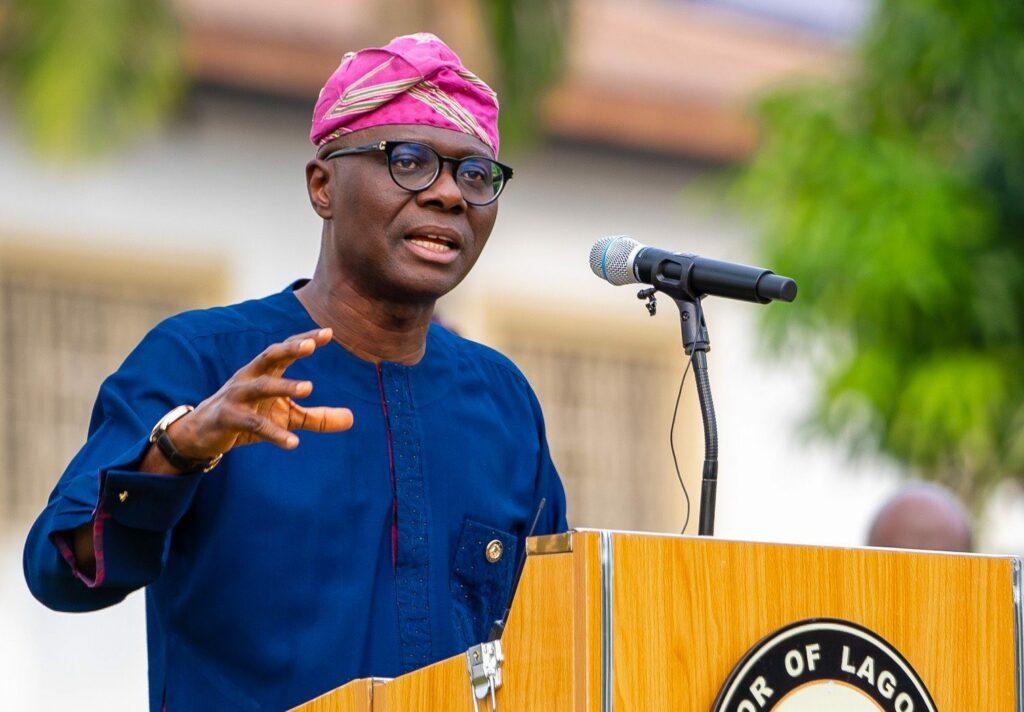
Lagos politics doesn’t do small. Not in scale, not in ambition, not in spending. And on Tuesday, Governor Babajide Sanwo-Olu proved it again — dropping a staggering ₦4.237 trillion budget proposal for 2026 before the Lagos State House of Assembly.
He calls it the “Budget of Shared Prosperity.”
But strip away the slogan and what you have is the largest fiscal gamble in the state’s history — a blueprint he insists will secure Lagos, modernize Lagos, and elevate Lagos, all in the final full year of his administration.
This is Sanwo-Olu’s home stretch budget. The “finish strong or go home quietly” year. And he made it clear: he intends to finish loud.
The Numbers: Blunt, Big, and Unapologetic
Let’s get into the raw figures — the ones that matter:
Total Budget Size: ₦4.237 trillion
- Projected Total Revenue: ₦3.993 trillion
- Deficit Financing: ₦243.332 billion
That’s a deficit Lagos must bridge through borrowing or creative revenue engineering. Either way, it’s a bill the state must confront.
Where the Money Is Coming From:
- Internally Generated Revenue (IGR): ₦3.119 trillion
- Federal Transfers: ₦874 billion
In plain language: Lagos plans to fund nearly three-quarters of this budget from its own internal systems — taxes, levies, charges, and economic activities. For a megacity this large, self-reliance has become both a badge and a burden.
How The Money Will Be Spent — Capital vs Recurrent
Sanwo-Olu split the budget almost down the middle:
- Capital Expenditure: ₦2.185 trillion
- Recurrent Expenditure: ₦2.052 trillion
Capital spending — projects, infrastructure, physical development — slightly edges out recurrent — salaries, overheads, debt servicing. For a city still wrestling with traffic, flooding, housing affordability, and exploding population growth, that tilt makes sense.
But the real story is in the detail:
Breakdown of Recurrent Expenditure:
- Total Overhead: ₦1.084 trillion
- General Overhead: ₦698.890 billion
- Subventions: ₦201.216 billion
- Dedicated Expenditure: ₦184.139 billion
- Personnel Cost: ₦440.494 billion
- Recurrent Debt Charges: ₦143.876 billion
- Debt Repayments (principal): ₦383.404 billion
Add the last two items and Lagos is devoting over ₦527 billion just to settle its debt burden in 2026. It’s the price of ambition — or the cost of previous years’ borrowing, depending on your angle.
Sectoral Allocation — The Power Map of Lagos 2026
Where the money ultimately lands tells Lagosians what the administration truly prioritizes:
- General Public Services: ₦847.472 billion
- Economic Affairs: ₦1.372 trillion
- Health: ₦338.449 billion
- Education: ₦249.132 billion
- Environment: ₦235.957 billion
- Public Order & Safety: ₦147.040 billion
- Housing: ₦123.760 billion
- Recreation, Culture & Amenities: ₦54.682 billion
- Social Protection: ₦70.024 billion
The massive allocation to Economic Affairs signals heavy spending on transportation, infrastructure, job-creation sectors, and physical development — the kind that voters can see and feel.
Looking Back: 2025 Performance
Sanwo-Olu didn’t come empty-handed. He arrived armed with numbers showing Lagos’ execution capacity in 2025.
As of 30 September 2025:
- Budget implementation: ₦2.056 trillion — 81% performance
- Actual Capital Expenditure: ₦1.238 trillion — 90% performance
- Actual Recurrent Expenditure: ₦818.577 billion — 84% performance
These are strong figures by Nigerian standards. They set the stage for the governor to argue that Lagos can handle an even bigger fiscal challenge in 2026.
The Governor’s Pitch — Four Pillars, One Big Promise
Sanwo-Olu framed his 2026 budget around four pillars:
1. Human-Centred Development
Education, healthcare, social protection, and affordable housing. He promised stronger support for youth, women, the elderly, and persons with disabilities.
2. Modern Infrastructure
The governor says 2026 will shift from “building” to “integrating” infrastructure — connecting roads, rail, waterways, energy, and digital systems into a unified network.
3. Thriving Economy
A push to strengthen MSMEs, support manufacturing, agribusiness, technology, tourism, and creative industries. Job creation is the anchor.
4. Effective Governance
Sanwo-Olu wants deeper fiscal reforms, accelerated e-governance, and stronger security coordination.
He emphasized that this final full year of his tenure is critical for “consolidating legacy” and completing all ongoing projects.
Assembly Response — Praise with Conditions
Speaker Mudashiru Obasa responded with his usual blend of camaraderie and caution.
He acknowledged the executive’s performance and maintained that the Assembly has been a dependable partner. But he also stressed that the 2026 budget must reflect Lagosians’ actual priorities — security, welfare, education, and infrastructure.
Obasa highlighted:
- the importance of citizen engagement
- the newly passed University of Medicine and Health Sciences Law (2025) designed to fight brain drain
- and the expectation that the state must push beyond ambition into delivery
His message was clear: “We support you — but we’re watching.”
The Stakes: What This Budget Really Signals
This 2026 proposal is more than paperwork. It’s a political statement. A legacy document. A financial roadmap. And a stress test for Lagos’ capacity to deliver large-scale development under tight timelines.
The key questions hanging over the proposal are loud:
- Can Lagos sustain this revenue expectation?
- Will capital projects be completed — or just launched?
- Is deficit financing manageable in the medium term?
- Will “shared prosperity” translate into everyday experience for residents?
The answers will not come from speeches or figures, but from the streets — from communities watching to see if the Lagos of 2026 becomes cleaner, safer, faster, more livable, and more inclusive.