
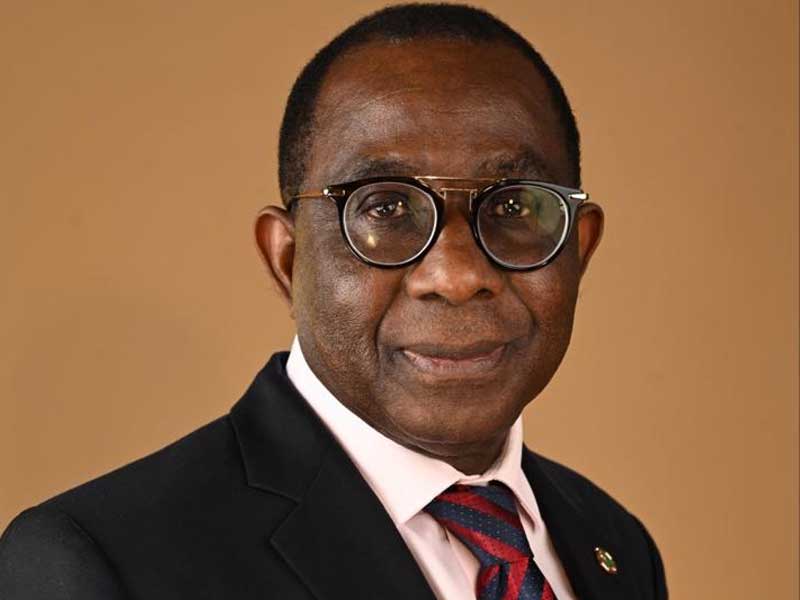
The tone is unflinching, the ambition palpable: Banji Oyeyinka Oyelaran-Oyeyinka—renowned development economist and newly appointed Chairman of the Governing Council at Ladoke Akintola University of Technology (LAUTECH) Teaching Hospital, Ogbomoso—has laid down a bold blueprint linking healthcare, industrialisation and rural transformation.
His appointment by Governor Seyi Makinde on 9 October 2025 marks more than a change in leadership. It signals a departure from the insular “hospital-just for medicine” model and pivots into a broader development agenda. ThisDay Live reports.
A Hospital with a Bigger Mission
Oyelaran-Oyeyinka walked into his new role not merely as a healthcare overseer but as a change agent. In his own words: “One of Nigeria’s biggest challenges is driving sustained economic growth by leveraging industrialisation to transform our rural and peri-urban communities—areas we often overlook.” He pointed to China’s model of lifting millions through transformation zones for low-tech manufacturing (textiles, leather goods) and training ordinary people with basic skills. His perfect pitch: “My vision is to replicate that kind of change here—turning our peri-urban areas into productive hubs.”.
Here’s the key pivot: the Teaching Hospital becomes not just a place to treat sickness, but a centre of health-industry convergence. That means learning labs, community production, rural skill hubs, and linking the hospital to the economic geography around it.
Why This Matters (and Why It’s Risky)
The significance is twofold:
- First: Locating world-class institutions in “second-tier” areas. Oyelaran-Oyeyinka argued that building a flagship teaching hospital in Ogbomoso means investing in infrastructure, innovation and opportunity outside Lagos and Abuja. “We must develop these areas, invest in infrastructure, and make them centers of innovation, industry, and opportunity.”
- Second: Widening the remit of healthcare to include local enterprise, skills, industry linkages. If executed, that means doctors and nurses working alongside technologists, artisans, and manufacturers—forming a micro-ecosystem of development.
But let’s keep it real: The model sounds great on paper. But Nigeria’s rural & peri-urban spaces have long suffered neglect, inadequate infrastructure, erratic funding, and weak governance. The hospital’s transformation hinges on more than vision—it needs boots, budgets, and political will.
Meet the Man: Credentials That Command Respect
Oyelaran-Oyeyinka ticks the “heavy-weight” box. First-Class in Chemical Engineering at Obafemi Awolowo University (formerly University of Ife). Advanced degrees at University of Toronto and University of Sussex (UK) where he earned a D.Sc. in Development Economics.
He’s spent more than two decades in international development: Senior Special Adviser on Industrialisation to the African Development Bank (AfDB) – where he led the USD 1 billion Special Agro-Industrial Processing Zones (SAPZ) initiative. He also served in key roles at UN-HABITAT and UNCTAD.
Bottom line: This isn’t his first rodeo. He’s among Nigeria’s most distinguished minds in development policy and industrial strategy.
What the Challenge Looks Like
Let’s clarify what he’s up against. Nigeria’s rural and peri-urban belts:
- often lack good healthcare infrastructure;
- are sidelined for top tertiary/teaching institutions;
- suffer industrial stagnation even though labour, land, and alternatives exist.
Oyelaran-Oyeyinka wants the hospital and its environs to become a “health + industry” engine. He says: “If we truly want to tackle poverty in Nigeria, we must focus on transforming our peri-urban and rural areas into centers of production and opportunity.”
Vision is fine. Execution is everything.
What the State Government is Saying
The appointment is a signal from state leadership. Governor Makinde’s announcement is widely reported. Punch confirms the move. In reconstituting the Governing Council of LAUTECH Teaching Hospital, the Governor tasked the new team with dedication, integrity and loyalty to the state. Guardian Nigeria reports.
This means the roadmap is backed by government imprimatur—but frankly, backing and budgeting are two different things.
The Road Ahead: Indicators, Risks, and Stakes
What to watch for:
- Will the hospital build out adjacent industrial-skills units or production hubs?
- Will peri-urban neighbours begin to see tangible employment or enterprise links to the hospital’s ecosystem?
- Will infrastructure (roads, utilities, digital connectivity) around Ogbomoso-based LAUTECH get the same energy as the vision?
- Will monitoring and accountability be built in—so that this is more than rhetoric?
What could go wrong:
- Funding gaps or shifting priorities could stall the industrial linkage angle;
- Hospital-industry clash: the mission drift between clinical excellence and economic development;
- Over-reliance on “big vision” without clear operational plans for community participation.
In short: The new Chairman of LAUTECH Teaching Hospital is not playing small. Banji Oyelaran-Oyeyinka is flipping the script: healthcare becomes a lever for industrialisation, community uplift and regional transformation. Whether the blueprint becomes reality depends on follow-through. The question now: will we move from talk to measurable change in peri-urban Nigeria?