
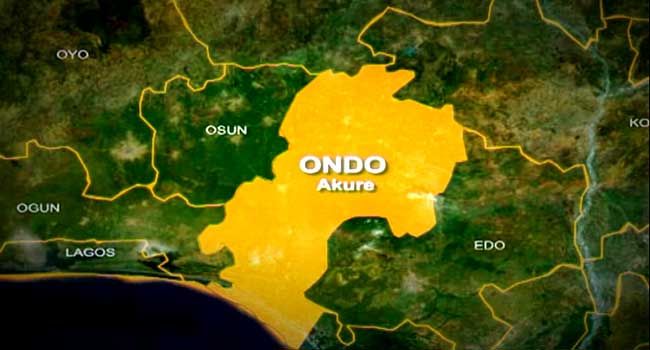
In a bold push to turn Nigeria’s abundant gas into industrial muscle, the federal government has formally hailed the launch of the country’s first-ever methanol and ammonium bicarbonate facility in Ondo State. The project, spearheaded by Supertech Chemical Industry Limited and sited at the Ondo–Linyi Industrial Hub in Omotosho, Okitipupa LGA, is billed as a watershed in the downstream gas value chain. (Vanguard)
A milestone and what it means
On Monday, Ekperikpe Ekpo, Minister of State for Petroleum Resources (Gas), led an inspection of the Supertech plant and announced firm backing from the federal government. He noted that production currently stands at 100,000 metric tons of methanol annually, alongside 160,000 metric tons of ammonium bicarbonate. (The Source)
Importantly – and this is where the stakes rise – the target is to scale methanol output to 500,000 metric tons by 2026. (New Telegraph)
“This is not just a processing facility,” Ekpo declared. “It is the transformation of gas into prosperity.” (BusinessDay)
He also emphasised that the project aligns squarely with President Bola Tinubu’s Renewed Hope Agenda, which places gas-based industrialisation, value creation and job generation at the heart of Nigeria’s economic revival. (Vanguard)
Why Ondo, why now?
The choice of Ondo State is no accident. The state has known gas potential and sits in a region criss-crossed by oil and gas infrastructure. One earlier dataset noted that the Ilaje/Ese-Odo area holds reserves of natural gas earmarked for methanol and fertiliser production. (Ondo State Investment Prospectus)
Supertech’s own website states its plant is on 500 acres in Okitipupa, Ondo State, launched (or at least commissioned) in November 2022 and billed as West Africa’s leading methanol manufacturer. (Supertech Industry)
That means Nigeria is no longer just dreaming of converting gas to chemicals – it is actually doing so, at least in inaugural fashion.
What’s in it for Nigeria?
- Value-addition: Turning raw gas into methanol and ammonium bicarbonate means capturing more of the value chain domestically instead of exporting raw gas or importing processed chemicals.
- Import substitution: With local production of chemicals and fertilisers, Nigeria can reduce its dependence on foreign imports. Dr. Alexander Ajipe, Principal Consultant to the hub, remarked that “we are now producing fertilisers and methanol here… it means that we will no longer rely on importation.” (BusinessDay)
- Job creation & tech transfer: The facility is meant to generate skilled jobs and transfer technology from Chinese partners to Nigerian workforce and systems. Supertech’s chairman, Yang Jijiang, said his firm is proud to contribute to Nigeria-China cooperation, technology transfer and local employment. (Vanguard)
- Gas utilisation: For too long Nigeria has flared or underused its gas. This project channels that gas into productive industrial uses, deepening the domestic gas market. The minister spoke of making gas “affordable and accessible across the country” and reducing dependence on imported LPG. (BusinessDay)
Reality check and caveats
All this sounds promising—but some caution is necessary. Yes, the plant claims capacity of 100k t methanol + 160k t ammonium bicarbonate. (Supertech Industry) But scaling to 500k t by 2026 is ambitious. Historically, many Nigerian industrial projects have struggled with infrastructure, supply chain, gas availability, regulatory consistency, power outages and funding gaps.
Also, while the government says upstream producers like the Nigerian National Petroleum Company Limited (NNPC Ltd) are engaged, turning words into sustained reliable gas supply remains a heavy lift. Ekpo himself said he “charged the NNPC to ensure upstream production takes advantage of this methanol output.” (BusinessDay)
What now?
- Supertech must maintain and ramp up production reliably, hitting current capacity before chasing the 500k target.
- Government agencies like the Gas Aggregation Company of Nigeria (GACN) and Nigerian Midstream and Downstream Petroleum Regulatory Authority (NMDPRA) must deliver regulatory clarity, infrastructure support and ensure gas feeding the plant isn’t diverted or delayed.
- Stability of gas supply, power infrastructure, transport/logistics and skilled workforce will determine whether this is a one-off headline or a model replicable across Nigeria.
- Monitoring and transparency will matter: the target is lofty, and Nigerians will judge success by invoices paid, chemicals dispatched, jobs created and import bills reduced.
Why this matters for you
This plant isn’t just another industrial press release. For millions of Nigerians it means potential: jobs near Ondo, cheaper fertilisers and chemicals for agriculture and manufacturing, and the promise of a Nigeria that turns its resources into factories instead of foreign dependence. If it works, it could be a blueprint for other states and sectors. If it fails, it will reaffirm the old story of big announcements and little delivery.
In Ondo’s gas-rich hinterland we may be witnessing the start of Nigeria’s gas-industrial awakening. The next chapters will tell whether this is the breakthrough or just another headline.