
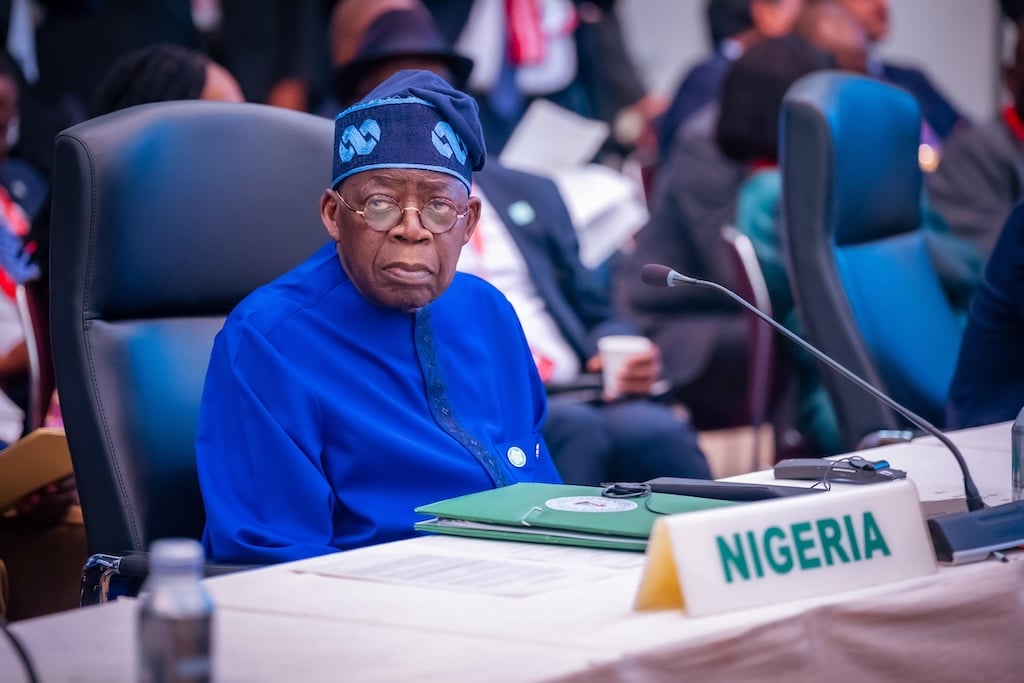
Abuja – In a firm tone more reminiscent of a CEO than a politician doing photo-op, President Bola Tinubu met with a high-powered delegation from Siemens Energy at the State House, directed sharp upgrades to Nigeria’s electricity transmission infrastructure and reaffirmed the federal government’s committed alignment behind the Presidential Power Initiative (PPI).
Government pledges the muscle
In the meeting with Siemens’ Middle East & Africa boss, Dietmar Siersdorfer, President Tinubu didn’t mince words: electricity is the backbone of economic growth, education, health-care, transport — you name it. “There is no industrial growth or economic development without power. I believe that power is the most significant discovery of humanity in the last 1,000 years,” he declared. (Premium Times)
He followed up by directing that major transformer substations currently configured for two phases be upgraded to three phases, so as to boost capacity and improve reliability across the national grid. (Premium Times)
What’s the deal? +4 GW ambition, €2.3 billion investment
The PPI, originally born out of an agreement between Nigeria and Germany (recall the 2018 visit of then German Chancellor Angela Merkel to Abuja), is now being accelerated. (Premium Times)
According to Siemens & partners, the next phase targets an additional 4,000 megawatts of electricity, with over US$2 billion (approx. €2.3 billion) already committed. (Business Insider Africa)
During the briefing, Nigeria’s Power Minister, Adebayo Adelabu, outlined that under the pilot phase (‘Phase Zero’) Siemens had delivered:
- Ten units of 132/33 kV mobile substations.
- Three units of 75/100 MVA transformers.
- Seven units of 60/66 MVA transformers.
These installations have added approximately 984 MW of transmission capacity to the grid. (Business Insider Africa)
Contracts have been approved for five major substations (in Abeokuta, Offa, Ayede-Ibadan, Sokoto and Onitsha) with mobilisation ongoing; two of the five are slated for completion by end of 2026. (Business Insider Africa)
Phase One — Batch Two then envisions six “brownfield” plus ten “greenfield” substations with a cumulative capacity of 4,104 MW under construction or planned. (The Nation)
Why this matters
Tinubu and his team are betting big: reliable power unlocks industry, boosts job creation, improves the ease of doing business, and — sloganeering aside — can help reduce poverty. The Finance Minister and Coordinating Minister for the Economy, Wale Edun, made that clear during the meeting. (Premium Times)
Further, the meeting touched on reforms: the signing of the Electricity Act 2023, the National Integrated Electricity Policy, activation of 15 state electricity markets — pointing to structural change beyond just infrastructure. (The Guardian)
From a broader perspective, analysts view the Nigeria-Siemens axis as a possible blueprint for energy reform in Africa. (Business Insider Africa)
Readiness vs. reality
Promising as the plan sounds, the reality on the ground is still mixed. While 984 MW added is notable, Nigeria’s total demand gap remains much larger. The metering rate among electricity customers is still just over half nationally — the Nigerian Electricity Regulatory Commission (NERC) reported 55 % in August 2025, up slightly from July. (The Guardian)
So yes, the targets are ambitious. And yes, the government’s public commitment is strong. But those phases must translate into real, reliable supply for homes and businesses — not just equipment on paper.
What the President emphasised
Tinubu said that Nigeria must “banish poverty” and reclaim its potential. He said the country is “taking [energy] very seriously” and expects to position itself “with pride on the continent” once the PPI phases are completed. (Premium Times)
His language wasn’t merely aspirational: He ordered expansion of substations, poured in resources, and aligned ministers and foreign partners behind clear timelines.
In short: Big promises — big test
- The government is doubling down on power infrastructure with Siemens as the technical lead for the PPI.
- The target: +4,000 MW extra, key substations upgraded, new investment flowing.
- The structural context: Electricity Act 2023, state markets activated, reforms underway.
- The angle: It’s not just about lights — it’s about industry, jobs, social services.
- The gap: Delivering equipment is one thing; shifting the electricity supply-demand dynamic in Nigeria is another.
For laga (the ordinary Nigerian in the market, at home, in small business) the promise is clear: better, more reliable power. For the government, the clock is ticking.