
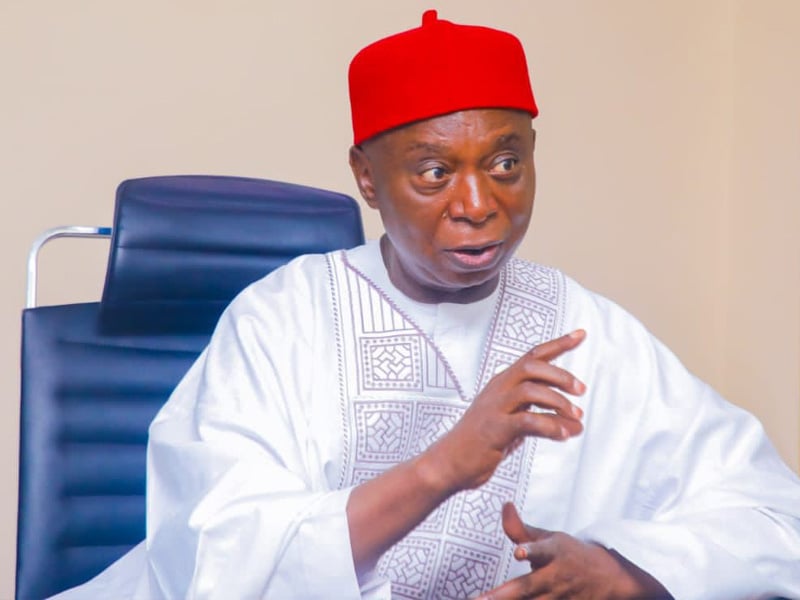
Abuja — In no uncertain terms, Senator Ned Nwoko (APC, Delta North) declared on Thursday that Nigerian politics, up till now too often a closed club for a few, must evolve into an open table where every citizen has a seat. Speaking to the News Agency of Nigeria in the nation’s capital, he said the time has come for political leaders to stop tinkering around the edges and start thinking beyond party lines and back-room deals.
“All of us entrusted with public office must recognise this: no one outside of us is going to make this country great,” he said, raising the stakes and pointing a finger at the very system many feel excluded from. “That is why my political ideals and actions align with the need to break down walls of exclusive politics, promoting inclusive governance that delivers justice, development, and true dividends for all residents in Delta North and Nigeria at large.”
Senator Nwoko, who chairs the Senate Committee on Reparations and Repatriation, reflected on his two-year term in office and insisted the bills he has sponsored bear proof of his ambition to transform governance.
Legislative Milestones Put On The Table
In his account of accomplishments, he noted that he has sponsored 34 bills aimed at reshaping Nigeria’s governance and inclusive development agenda. That is a tall claim, and recent reporting confirms it. (Vanguard)
Among the bills Nwoko highlighted:
- Constitutional Alteration Bill for the creation of “Anioma State” from within Delta North, meant to address geopolitical imbalance and enhance representation.
- Nigerian Youth Entrepreneurship Grant Programme (Establishment) Bill — focused on youth empowerment.
- Waste Management and Malaria Eradication Agency (Establishment) Bill — addressing public health and environmental issues.
- One-Month Rent Limitation and Landlord Registry Act — caps advance rent to one month (for defined residential categories) and establishes a national tenancy registry to protect tenants and strengthen housing policy.
- Cashless Asset Acquisition Act — mandates that property and high-value transactions go through traceable, cashless systems linked with AML and KYC frameworks.
- Others include the Electoral Courts Establishment Bill, Self-Defence & Firearm Ownership Regulation Bill, Diaspora Voting Bill, and Upgrade of FCE (Technical) Asaba to FUT Asaba Bill.
These bills, he said, reflect “my vision of a reformed, equitable, and globally-competitive Nigeria where governance works for the people, institutions serve with integrity, and every citizen… feels the impact of effective representation.” (Vanguard)
It must be noted: the legislative agenda is ambitious. It covers diverse sectors — housing, youth, governance, security, finance, diaspora relations, and regional representation. The question remains: sponsorship is one thing; enactment and effect are quite another.
Breaking Walls Or Reinforcing Structures?
Nwoko’s thrust for inclusive politics is straightforward. He argues the nation cannot afford a “private gathering of a few.” And by making his agenda public, he positions himself as one who intends to widen the tent. That message resonates in a country where many feel left out of the power equation.
However, the context matters. The climate of Nigerian governance is still dominated by elite networks, resources tied to patronage, and regional cleavages. Simply sponsoring bills doesn’t automatically dismantle the walls he talks about. Meaningful change will require these bills becoming law, and then being implemented on the ground.
From Delta North to Nigeria’s federation, people will judge delivery, not just promise. The “true dividends” of inclusive governance — jobs, infrastructure, trust — must come at community level. Whether Nwoko’s legislative blitz translates into real-world impact remains the key test.
Why It Matters
- Representation: By highlighting the creation of Anioma State, Nwoko taps into deeper issues of regional identity and marginalisation. That proposal strikes at the heart of Nigeria’s state-zone structure and could provoke pushback, debate, and heightened expectations.
- Governance architecture: Bills like the hosting of rent caps, tenancy registries, and cashless asset acquisition indicate attempts to shift power from opaque systems into more transparent ones.
- Inclusivity promise: In an era where Nigerian politics is often seen as exclusionary, the message of “open table” politics matters. But rhetoric must match results.
- Political brand: For Nwoko personally, this story strengthens his brand as a “doing” senator — someone raising plates, not just attending them.
The Bottom Line
Senator Ned Nwoko is raising his voice and raising the stakes. He is telling political leaders: you either step up and open the doors, or you stay in the room with the same old faces. His 34-bill portfolio is his proof-point. His message of inclusive politics is his banner.
But a banner alone doesn’t build houses, create jobs or raise living standards. Time will tell whether these 34 bills become instruments of change or just headlines in another election cycle. The people of Delta North — and Nigerians at large — will be watching.
In a country where politics too often resembles a locked room, Senator Nwoko is trying to bring in new chairs. The question now: will the doors stay open when the cameras leave?